
If you are noticing changes in a mature tree on your property, understanding the warning signs that your mature tree in Plantation FL is a hazard can help prevent property damage and safety concerns. Plantation’s tropical weather patterns, seasonal storms, strong winds, heavy rainfall, and urban growing conditions place additional stress on older trees. While mature trees provide shade and visual value, structural defects and hidden decline can increase the likelihood of failure if left unaddressed. Professional tree risk assessments help identify these concerns before they become larger problems.
Why Mature Trees in Plantation Require Extra Attention
Mature trees often experience decades of environmental stress.
In plantations, common factors include:
- Seasonal wind exposure
- Saturated soil conditions after heavy rainfall
- Root disturbances from landscape changes
- Compacted urban soils
- Previous storm damage
- Long-term structural growth patterns
Tree age alone does not automatically create risk, but structural defects become more important as trees mature. Professional evaluations focus on overall tree condition, likelihood of failure, and nearby targets such as homes, driveways, and outdoor living spaces.
Dead or Hanging Branches in the Upper Canopy
Large mature trees can hide problems high above ground level.
Branches Without Leaves
Dead sections may indicate declining health.
Broken Limbs Hanging in the Canopy
Loose branches can fail unexpectedly.
Uneven Crown Development
Sections of the canopy may indicate structural imbalance.
Dead or damaged limbs become more concerning when positioned over structures, sidewalks, or areas with regular activity. Professional inspections help determine whether selective trimming or additional mitigation is necessary.
Cracks, Cavities, and Visible Trunk Damage
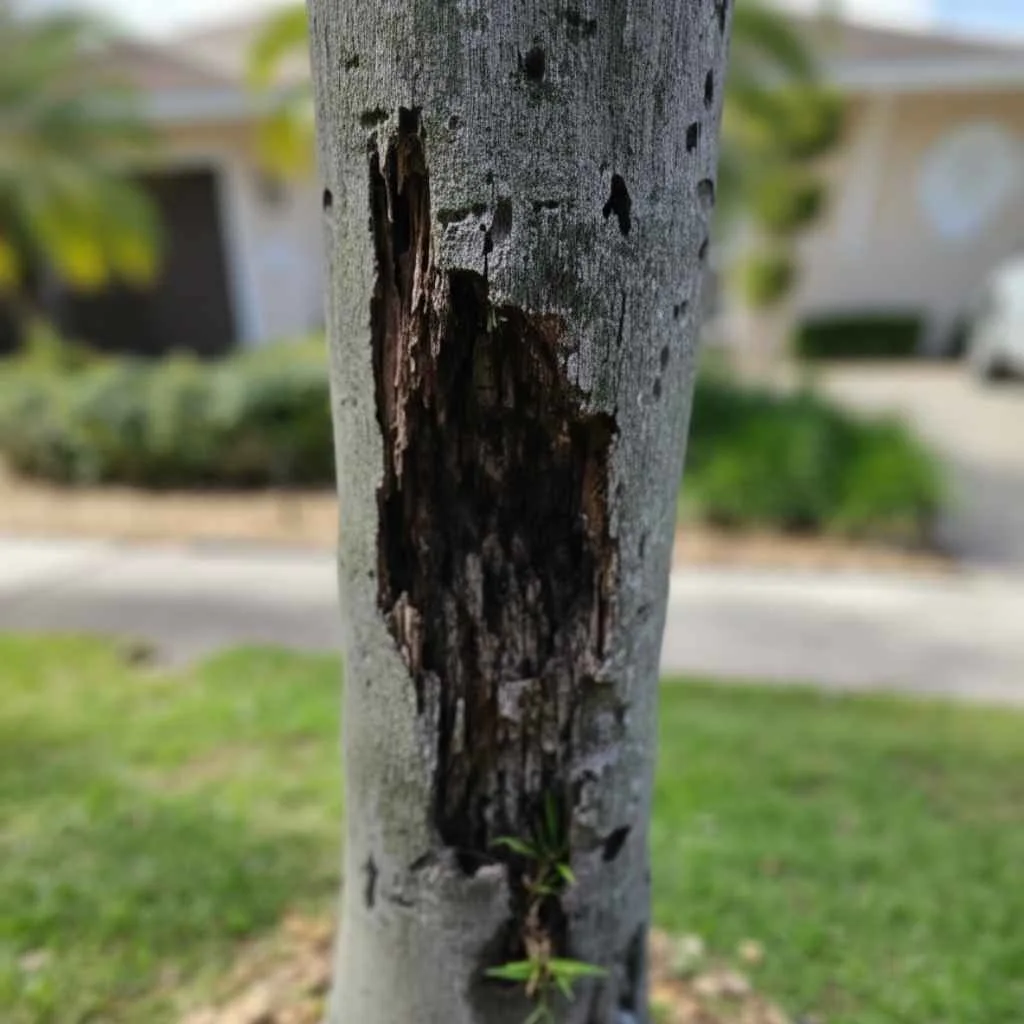
One of the most important indicators of tree risk is visible trunk deterioration.
Watch for:
- Deep vertical cracks
- Hollow areas or cavities
- Bark separation
- Signs of internal decay
- Fungus growth near the trunk
Decay inside the trunk is not always visible from the outside, which is why visual observation alone may not tell the full story. Professional tree risk assessments evaluate whether structural integrity has been compromised.
Job Story: Identifying Hidden Risk Before Storm Season
A Plantation homeowner noticed their mature shade tree had developed a slight lean and occasional branch shedding after periods of heavy rain.
At first, the changes seemed minor because the tree still appeared healthy overall.
During a professional tree risk assessment, additional concerns were identified, including branch attachment weaknesses and early signs of internal decline that were not visible from ground level.
Rather than waiting for severe weather to expose the problem, corrective recommendations were made to reduce future risk and preserve as much of the tree as possible.
This type of proactive assessment helps homeowners make informed decisions while protecting surrounding property.
Leaning Trees and Root Problems Should Never Be Ignored
Not all leaning trees are dangerous, but sudden or increasing lean deserves professional attention.
Potential warning signs include:
Exposed or Lifting Roots
Movement at the root zone may indicate instability.
Soil Heaving
Raised soil can signal shifting root systems.
Root Collar Changes
Decay or swelling around the base can weaken support.
Root problems are often hidden below the surface, making professional evaluation especially valuable for mature trees.
Weak Branch Structure and Multiple Trunks
Some mature trees develop structural conditions that increase failure potential.
Look for:
- Sharp V-shaped branch unions
- Multiple trunks growing from one point
- Uneven canopy weight
- Heavy extended limbs
Trees with weak attachment points may become more vulnerable during Florida storms and high winds. Risk assessments help determine whether pruning or additional management can reduce concern while preserving tree health.
Professional Advantage: Why Tree Risk Assessment Is Not DIY
A mature tree can appear healthy while internal issues continue developing.
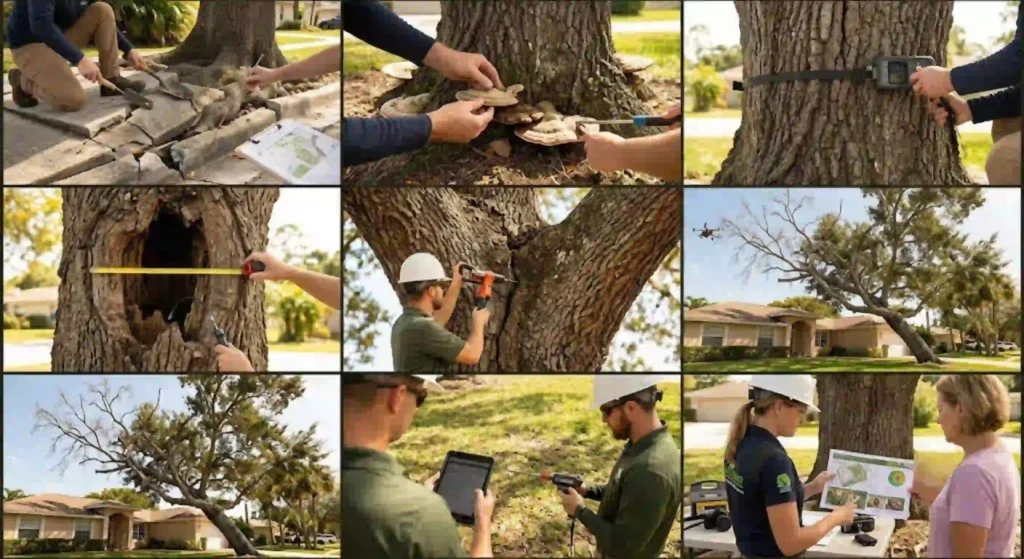
Professional tree assessments evaluate:
Structural Stability
Examining trunk and branch condition.
Root Health
Looking for instability indicators.
Defect Severity
Determining probability of failure.
Site Conditions
Assessing surrounding targets and environmental exposure.
Professional assessment supports informed decisions and often helps preserve healthy trees rather than removing them unnecessarily.
FAQ
How do I know if my mature tree is hazardous?
Look for dead branches, trunk cracks, cavities, root movement, or sudden leaning. A professional assessment confirms actual risk.
Can a healthy-looking tree still be dangerous?
Yes. Internal decay and structural defects are not always visible externally.
Should mature trees always be removed?
No. Many mature trees can remain healthy with monitoring or corrective care.
When should a tree risk assessment be scheduled?
Before storm season, after severe weather, when visible changes appear, or as trees reach maturity.
Schedule a Professional Tree Risk Assessment
If you are seeing changes in an older tree, early evaluation can help prevent avoidable damage and support healthier long-term tree management.
Request a professional tree risk assessment today and make informed decisions for your Plantation property.