
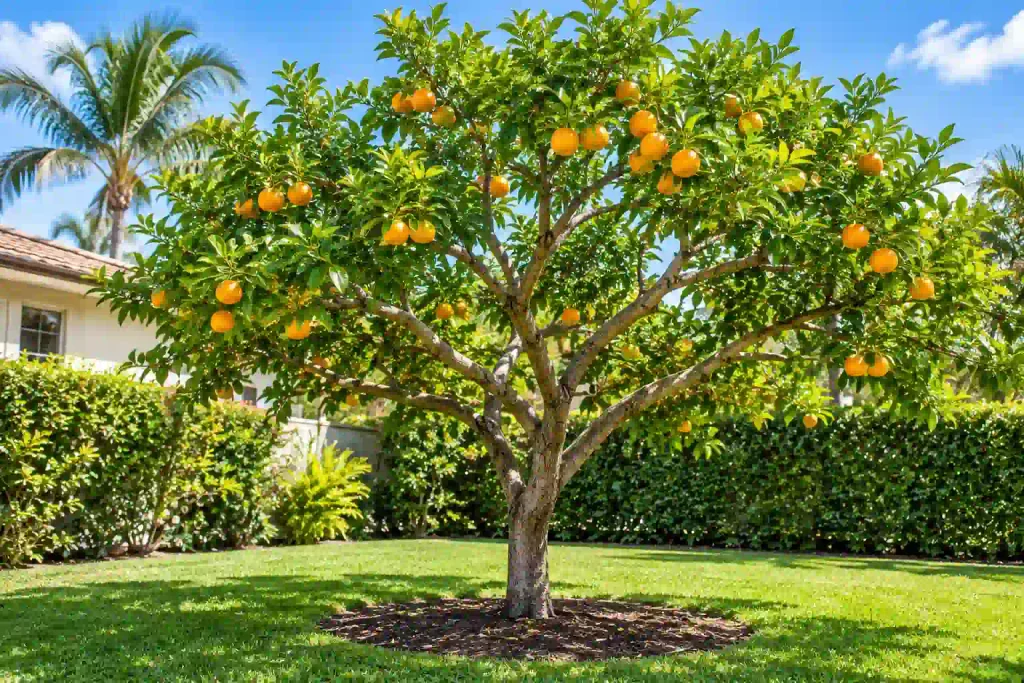
Fruit trees need more than occasional cutting to remain productive. In Boca Raton, South Florida’s warm, humid climate, seasonal rainfall, and coastal growing conditions make thoughtful pruning important for managing canopy growth, improving airflow, and maintaining healthy branches. Fruit Tree Pruning should be guided by the tree species, age, condition, and fruiting habits, not simply by how large or overgrown it looks.
All About Trees Tree Service provides professional tree pruning in the Boca Raton area. Its pruning process begins with an evaluation of the tree’s species, growth pattern, age, and overall health. The company’s approach focuses on removing weak, damaged, or improperly growing branches while supporting balanced structure and long-term tree health.
This matters for fruit trees because excessive or poorly timed cuts can reduce the next crop, expose branches to stress, or interfere with the tree’s natural growth. Understanding the right pruning practices helps homeowners make informed decisions about their backyard fruit trees.
Why Fruit Tree Pruning Matters in Boca Raton
Fruit trees can become dense as they mature. When branches grow too close together, the canopy may receive less sunlight and have limited air movement. This can make it harder to inspect the tree, manage its shape, and maintain healthy growth.
Proper pruning can help:
- Improve sunlight penetration: A balanced canopy allows light to reach more of the tree’s interior.
- Increase airflow: Removing selected crowded branches helps air circulate through the canopy.
- Remove damaged growth: Dead, broken, or diseased limbs can be removed before they create further problems.
- Support stronger structure: Corrective cuts can address weak attachments and poorly positioned branches.
- Maintain manageable growth: Strategic shaping helps prevent branches from interfering with walkways, structures, or nearby landscaping.
All About Trees identifies improved air circulation, sunlight penetration, disease prevention, and stronger branch development among the benefits of professional pruning.
Best Practices for Pruning Different Fruit Trees
Not every fruit tree should be pruned in the same way. Mango, avocado, citrus, and other fruit-bearing trees have different growth patterns and fruiting habits. The timing and amount of pruning should reflect the individual species and its condition.
Mango Trees
Mango trees can develop broad, dense canopies. Selective pruning after the fruiting cycle may help manage height, remove damaged growth, and maintain a more accessible canopy. Avoid removing too much healthy growth at once, as excessive pruning can affect future fruit production.
Avocado Trees
Avocado trees benefit from careful structural maintenance. Remove dead, damaged, or crossing branches where appropriate, while preserving a strong framework. Large or unnecessary cuts should be avoided because they can expose interior limbs to intense sunlight and stress the tree.
Citrus Trees
Citrus trees generally need selective maintenance rather than aggressive shaping. Remove dead or diseased branches and address crossing growth when necessary. Avoid removing excessive healthy canopy, which helps protect the trunk and branches from direct sunlight.
Other Tropical Fruit Trees
Trees such as guava, lychee, and banana have different pruning requirements. Their growth habits and fruiting patterns should determine the approach. A qualified tree professional can assess the species and recommend a suitable maintenance plan.
When Is the Best Time to Prune Fruit Trees?
Timing is one of the most important parts of fruit tree care. For many tropical and subtropical fruit trees in South Florida, a useful general rule is to prune shortly after the final harvest. This helps avoid removing developing flowers and interfering with the next fruiting cycle. However, the right timing can vary by species and local conditions.
For example, University of Florida guidance recommends pruning mango trees within about a month after the last fruit is harvested and before October to avoid disrupting the following year’s flowering. Citrus has its own canopy-management considerations, so homeowners should not assume every fruit tree follows the same schedule.
Before scheduling work, consider:
- The tree’s fruiting and flowering cycle.
- Whether the tree has finished producing fruit.
- The presence of dead, diseased, or storm-damaged limbs.
- The amount of growth that needs to be removed.
- Whether pruning could expose previously shaded branches to intense sunlight.
A professional assessment helps determine whether the tree needs light maintenance, structural correction, or more extensive work.
Common Fruit Tree Pruning Mistakes to Avoid
Incorrect pruning can weaken a tree, reduce fruit production, and create unnecessary stress. Some common mistakes include:
Removing Too Much of the Canopy
Aggressive pruning may remove productive branches and expose the tree to excessive sunlight. UF/IFAS guidance for tropical fruit trees advises avoiding removal of more than 25% of the canopy during a pruning session.
Pruning at the Wrong Time
Cutting branches just before flowering or during an important stage of fruit development can interfere with the next crop. The correct schedule depends on the fruit tree species and its harvest cycle.
Leaving Damaged or Crossing Branches
Dead wood, damaged limbs, and branches that rub against one another can affect tree structure. Selective removal helps reduce these problems and supports a healthier canopy.
Using Unsuitable or Unclean Tools
Dull equipment can make poor cuts, while contaminated cutting tools may spread pathogens between plants. Properly maintained and sanitized tools are an important part of responsible pruning.
Why Professional Fruit Tree Pruning Makes a Difference
Fruit trees can be difficult to manage as they grow taller and develop heavier branches. A homeowner may recognize that a tree looks overgrown but may not know which branches should be removed without affecting its structure or future production.
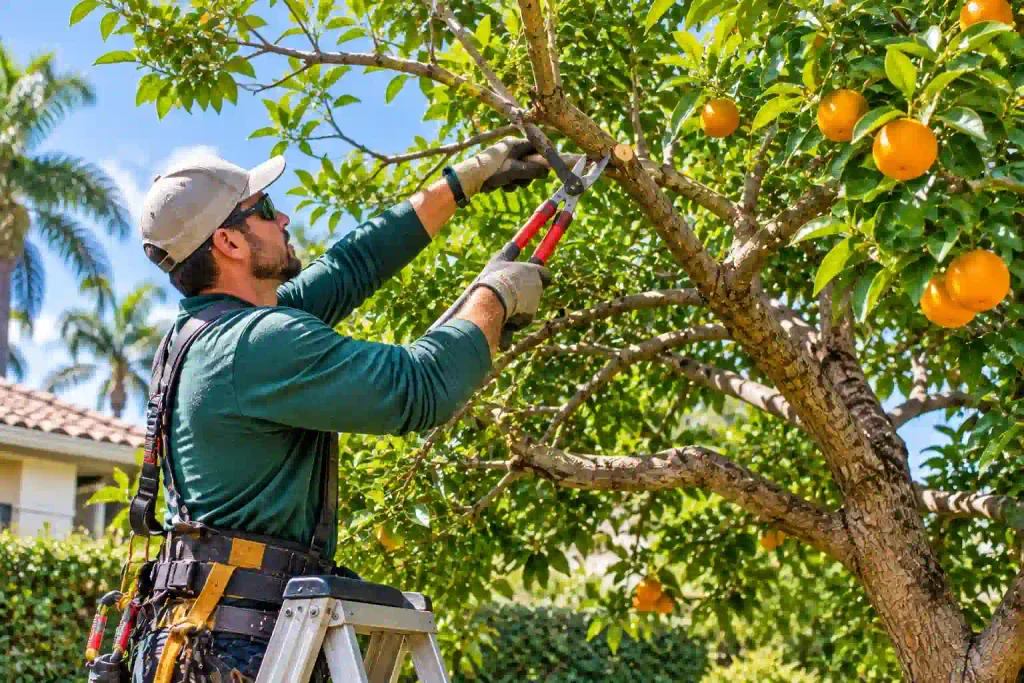
Professional pruning starts with evaluating the tree rather than cutting branches at random. All About Trees states that its arborists consider species, growth pattern, age, and overall health before choosing a pruning strategy. Its service focuses on removing weak, damaged, and improperly growing branches while preserving balanced development. All About Trees Tree Service
The company’s Boca Raton service page identifies its ISA Certified Arborist credential, Florida license FL-10096A, and experience serving residential and commercial properties. It also highlights knowledge of local soil and coastal conditions. All About Trees
For homeowners, this professional approach can be particularly useful when a mature mango or avocado tree has become too tall, when large limbs need attention, or when the canopy requires structural correction. UF/IFAS also recommends that significant size reduction of large mango and avocado trees be handled by a licensed and insured professional arborist, especially when climbing is required. Ask IFAS
Job Story: Restoring an Overgrown Backyard Mango Tree
The following is an illustrative scenario, not a documented All About Trees customer project.
A Boca Raton homeowner has a mature mango tree that produces fruit but has developed a dense canopy with several crossing and damaged branches. Some fruit is difficult to reach, and the interior of the tree receives limited sunlight.
Rather than removing large sections of the canopy, the homeowner arranges a professional assessment. The arborist evaluates the tree’s condition, growth pattern, and fruiting cycle before recommending selective pruning. Weak and damaged limbs are addressed, crowded growth is managed, and the tree’s overall structure is considered.
The result of a properly planned maintenance approach is a more manageable canopy with improved light penetration and airflow, while avoiding unnecessary removal of healthy fruit-bearing growth.
How All About Trees Approaches Tree Pruning in Boca Raton
All About Trees Tree Service serves Boca Raton homeowners, gated communities, estates, and commercial properties. Its pruning service is designed to support tree health, improve structure, remove compromised limbs, and maintain an attractive landscape.
The company also provides arborist consultations, tree trimming, tree risk assessments, tree fertilization, and other tree care services. Its Boca Raton page highlights the importance of understanding local conditions, including coastal sandy soils and salt exposure, when managing trees across the area.
For fruit trees, the first step is to discuss the tree’s species, current condition, and pruning goals. Because the company’s published pruning page describes general tree pruning rather than a separate fruit-tree-specific service, homeowners should confirm the exact scope of fruit tree work during consultation.
Frequently Asked Questions About Fruit Tree Pruning
1. How often should fruit trees be pruned?
Many tropical fruit trees benefit from annual or twice-yearly maintenance, depending on species, growth rate, and condition. The goal is to maintain a manageable shape, remove unhealthy growth, and preserve productive branches.
2. Should fruit trees be pruned before or after harvesting?
For many tropical fruit trees in South Florida, pruning shortly after the final harvest is a useful general guideline. However, timing differs by species, so it is important to consider the tree’s flowering and fruiting cycle.
3. Can pruning improve fruit production?
Proper pruning can improve light penetration and maintain productive growth throughout the canopy. However, excessive pruning can remove fruit-bearing branches and reduce production, so the amount removed should be carefully considered.
4. Can an overgrown mango tree be reduced in height?
Yes, but significant height reduction should be planned carefully. Removing too much canopy at once can stress the tree and affect future fruiting. A professional arborist can evaluate its structure and recommend an appropriate approach.
5. Why should I hire a professional for Fruit Tree Pruning?
Professional arborists can assess branch structure, identify damaged growth, and determine which cuts are appropriate for the tree’s condition. This is especially important for mature trees with large or hard-to-reach branches.
Schedule Professional Fruit Tree Pruning in Boca Raton
Healthy fruit trees need thoughtful maintenance to remain productive, structurally sound, and manageable. From removing damaged branches to improving canopy airflow and controlling excessive growth, proper Fruit Tree Pruning helps protect the long-term condition of your landscape.
All About Trees Tree Service provides professional pruning and arborist services for residential and commercial properties in Boca Raton. Its ISA Certified Arborist-led approach focuses on evaluating each tree before recommending the appropriate care.
Call (954) 608-8837 to schedule a consultation and discuss your fruit tree’s pruning needs. The team is based at 4933 SW 44th Ave, Fort Lauderdale, FL 33314, and serves Boca Raton and surrounding South Florida communities.