

Healthy trees depend on healthy soil, but watering and fertilizing alone cannot guarantee strong growth. In Coral Springs, FL, South Florida’s sandy soils can drain quickly and hold limited nutrients, making it difficult for trees to access the resources they need. When leaves turn yellow, growth slows, or trees begin declining despite regular care, soil sample testing can help identify the underlying problem. Instead of applying fertilizer without knowing what the soil lacks, homeowners can use laboratory analysis to make informed decisions about tree nutrition and landscape health.
All About Trees Tree Service provides professional soil sampling and analysis through certified arborists. The company collects samples from multiple points around tree root zones and evaluates nutrient levels, pH, soil composition, and organic matter. Its goal is to develop customized treatment recommendations based on actual soil conditions rather than generic fertilizer applications.
Why Soil Sample Testing Matters in Coral Springs
South Florida landscapes present specific challenges for maintaining healthy trees. Sandy soil is common throughout the region, and its structure allows water to drain rapidly. While good drainage can reduce waterlogging, it can also make it difficult for soil to retain moisture and essential nutrients.
Rainfall, irrigation, soil conditions, and landscape maintenance practices can influence nutrient availability. A tree may receive regular watering but still struggle because its roots cannot access enough nitrogen, phosphorus, potassium, or other essential nutrients.
Soil analysis helps property owners understand what is happening below the surface. It can reveal nutrient deficiencies, unsuitable pH levels, and soil conditions that may interfere with healthy root development.
For Coral Springs homeowners, testing is particularly useful when trees show persistent symptoms that do not improve with routine care. It provides a scientific starting point for deciding whether fertilization, pH correction, or soil conditioning is appropriate.
Best Practices for Collecting Soil Samples
Accurate results begin with proper sample collection. A soil test is only as useful as the material submitted for analysis. Samples should represent the soil surrounding the trees being evaluated rather than coming from one random spot in the yard.
Collect Samples From Multiple Points
Soil conditions can vary within a single landscape. One section may have different drainage, organic matter, or nutrient levels than another. Taking samples from several points around a tree’s root zone helps create a more representative picture.
All About Trees Tree Service follows this approach by collecting samples from multiple locations around the root zone. This helps its certified arborists develop a more accurate nutritional profile.
Focus on the Root Zone
The root zone is where trees absorb water and nutrients. Sampling should focus on the soil surrounding the tree’s active root area rather than relying only on surface soil near the trunk.
The appropriate sampling depth and collection pattern depend on the testing purpose and laboratory instructions. Professional collection helps ensure that samples are suitable for meaningful analysis.
Avoid Mixing Different Soil Conditions
Samples from areas with noticeably different conditions should generally be kept separate. For example, soil near a fertilized garden bed may not represent the soil around a large landscape tree.
Similarly, areas affected by recent construction, unusual drainage, or concentrated fertilizer applications may need separate evaluation. Combining unrelated samples can produce results that do not accurately represent any one area.
Use Clean Sampling Equipment
Tools and containers should be clean to prevent outside materials from affecting the sample. Fertilizer residue, soil from another location, and other contaminants can interfere with accurate testing.
Following appropriate collection and handling procedures helps the laboratory produce more dependable results.
What Does a Professional Soil Analysis Measure?
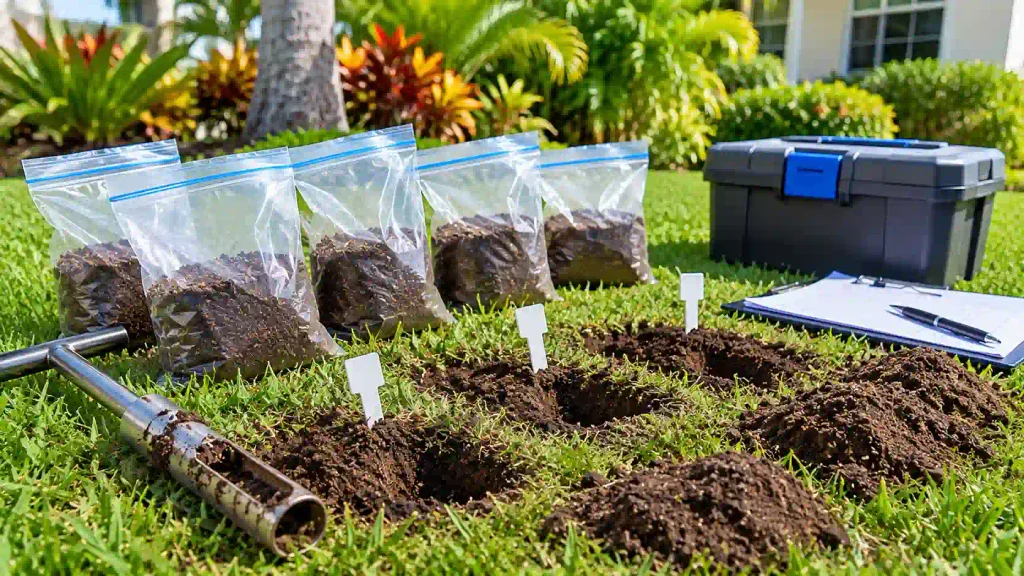
A comprehensive soil analysis looks at several factors that influence tree nutrition and root health. All About Trees Tree Service evaluates important nutrients, pH, soil composition, and organic matter to help determine which treatments may be beneficial.
Nitrogen, Phosphorus, and Potassium
These three macronutrients play major roles in plant growth:
- Nitrogen (N): Supports leaf development, foliage growth, and overall plant vigor.
- Phosphorus (P): Supports energy transfer and important root and plant development processes.
- Potassium (K): Helps regulate water balance and supports several essential plant functions.
A deficiency or imbalance can affect tree performance. However, applying more fertilizer is not automatically the solution. The appropriate treatment depends on the test results and the tree’s condition.
Secondary and Micronutrients
Trees also require smaller quantities of other nutrients. These include elements that support chlorophyll production, enzyme activity, and other biological processes.
South Florida’s sandy soils may have limited nutrient-holding capacity, making micronutrient availability an important consideration. Testing can help identify whether a specific deficiency may be contributing to poor tree health.
Soil pH Levels
Soil pH influences how easily roots can absorb available nutrients. Soil that is too acidic or too alkaline may limit nutrient availability, even when those nutrients are present.
This is one reason why adding fertilizer without testing can be ineffective. A tree may continue showing deficiency symptoms because the soil pH prevents proper nutrient absorption.
Soil Composition and Organic Matter
Soil structure affects drainage, aeration, water retention, and nutrient availability. Sandy soil often drains rapidly and contains relatively little organic matter.
Evaluating soil composition helps arborists determine whether amendments, conditioners, or organic matter may improve growing conditions and long-term fertility.
Recognizing Signs That Your Soil Needs Testing
Trees often show visible symptoms when growing conditions are unsuitable. However, similar symptoms can result from different problems, so visual inspection alone may not identify the exact cause.
Consider professional soil sample testing when you notice:
- Yellowing or discolored leaves.
- Stunted or unusually slow growth.
- Poor foliage development despite regular watering.
- Trees that appear weak compared with nearby healthy trees.
- Recurring nutrient-related symptoms after fertilization.
- Declining tree health without an obvious pest or disease explanation.
These signs do not automatically prove that the soil is deficient. Root damage, pests, disease, irrigation problems, and environmental stress can also affect tree health. Soil analysis helps narrow down the possibilities and supports a more informed assessment.
An Illustrative Coral Springs Soil Testing Situation
Consider a hypothetical Coral Springs homeowner whose mature landscape trees begin developing yellow leaves and producing less new growth. The homeowner has maintained a regular watering schedule and applied fertilizer, but the trees continue to look unhealthy.
A certified arborist evaluates the landscape and recommends soil sample testing. Samples are collected from multiple points around the affected root zones and submitted for analysis.
The results indicate that the soil has an unsuitable pH level and limited availability of certain nutrients. Instead of recommending another general fertilizer application, the arborist develops a targeted treatment plan that may include pH correction and appropriate soil amendments.
After treatment, the trees can be monitored to evaluate their response and determine whether additional care is needed.
This example demonstrates why testing should come before making assumptions. A visible nutrient deficiency does not always mean the soil simply needs more fertilizer.
How Soil Testing Guides Tree Fertilization
Fertilization can support tree health when it addresses a genuine nutritional need. However, unnecessary or incorrectly selected products may fail to solve the problem and can contribute to nutrient imbalance.
All About Trees Tree Service uses laboratory results to develop customized treatment plans. Depending on the findings, recommendations may include:
- Targeted fertilization: Supplying nutrients identified as deficient or insufficient.
- pH correction: Addressing soil acidity or alkalinity that interferes with nutrient availability.
- Soil conditioners: Improving soil properties when the analysis indicates a need.
- Organic matter amendments: Supporting better moisture retention and long-term soil fertility.
- Biostimulants: Considering suitable products as part of a broader soil and tree-care strategy.
The treatment should reflect the specific tree, soil conditions, and test findings. There is no single fertilizer or amendment that is appropriate for every Coral Springs landscape.
Why Choose Certified Arborists for Soil Sample Testing?
Collecting soil and receiving laboratory results are only parts of the process. Understanding what those results mean for a particular tree requires knowledge of plant nutrition, soil conditions, and root health.
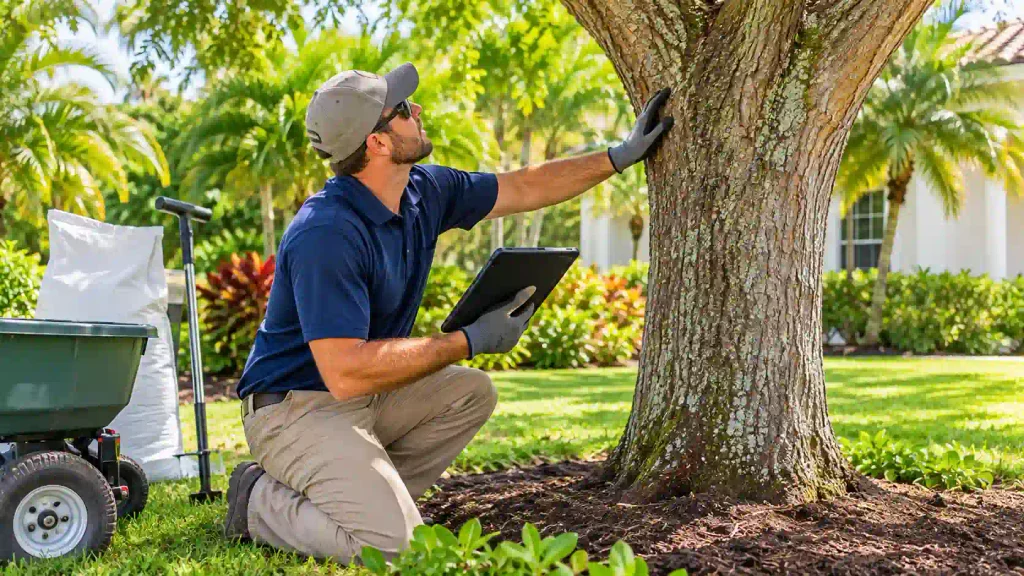
All About Trees Tree Service provides soil sampling and analysis as part of its professional arborist services. Its certified arborists collect samples from multiple points around the root zone and use the results to recommend treatments based on actual soil conditions.
The company serves Coral Springs, Fort Lauderdale, Hollywood, Davie, Boca Raton, Weston, Plantation, Parkland, and other Broward County communities.
Rather than recommending the same fertilizer for every property, the company focuses on identifying the soil’s specific needs. This helps homeowners make more informed decisions about nutrient applications, pH adjustments, and soil improvement.
Build a Healthier Landscape With Professional Soil Analysis
Healthy trees begin below the surface. In Coral Springs, sandy soil, nutrient availability, and pH conditions can influence how well trees grow and respond to routine maintenance. Professional soil sample testing helps uncover these factors so that fertilization and soil improvement decisions are based on reliable information.
All About Trees Tree Service offers professional soil sampling and analysis through certified arborists, with customized recommendations for tree nutrition and soil health. If your trees have yellowing leaves, stunted growth, or unexplained decline, contact the team at (954) 608-8837 to schedule a soil analysis or request a free consultation.
Frequently Asked Questions
1. How often should soil sample testing be performed?
Testing frequency depends on tree health, soil conditions, previous treatment, and landscape changes. Testing is particularly useful when trees show unexplained decline or when a homeowner needs to evaluate the results of an existing fertilization program.
2. Why is soil pH important for tree health?
Soil pH affects nutrient availability. When the pH is too high or too low for a particular tree, roots may struggle to absorb nutrients even when those nutrients are present in the soil.
3. Can sandy soil affect tree growth in Coral Springs?
Yes. Sandy soil drains quickly and generally holds less water and nutrients than soils with more organic matter. Soil analysis can help determine whether targeted amendments or conditioners may improve growing conditions.
4. Does soil testing tell me which fertilizer to use?
A soil analysis provides information about nutrient levels and pH. A certified arborist can interpret the results and recommend a suitable fertilization program or other soil treatments based on the findings.
5. Can soil testing identify every cause of unhealthy trees?
No. Soil analysis evaluates soil conditions but does not diagnose every tree health problem. Arborists may also need to assess roots, foliage, pests, diseases, irrigation, and environmental stress.