

Fort Lauderdale’s warm climate and heavy seasonal rainfall create excellent growing conditions, but local sandy soils can make it difficult for lawns, trees, and landscape plants to receive and retain the nutrients they need. Water can move quickly through sandy ground, carrying nutrients with it, while pH and soil composition can vary from one property to another. Fort Lauderdale Soil Testing Services for Healthy Landscapes provide the information needed to understand what is actually happening beneath the surface before applying fertilizers, amendments, or other treatments.
Professional soil sampling and analysis can identify important characteristics such as soil pH, nutrient availability, and overall soil conditions. Instead of guessing why plants are struggling, property owners can use testing results to develop a more informed landscape management strategy.
Why soil testing services Matters in Fort Lauderdale
A landscape can receive plenty of sunlight and irrigation and still struggle if the soil does not provide the right growing environment.
Fort Lauderdale properties can have sandy soils that drain rapidly. This can be beneficial when excessive water needs to move away from plant roots, but rapid drainage can also make it harder for soil to retain certain nutrients and moisture.
Heavy seasonal rainfall adds another variable.
When significant amounts of water move through the root zone, nutrients can be displaced before plants have an opportunity to use them effectively.
That is why adding fertilizer without understanding the existing soil can be inefficient.
A soil test provides a baseline.
Instead of assuming that a lawn needs more fertilizer or that a planting bed needs a particular amendment, professional analysis can help determine what the soil actually needs.
What Professional Soil Testing Can Reveal
Soil testing is useful because soil health involves more than simply determining whether the ground looks dry or fertile.
A professional soil analysis can provide information that helps guide landscape decisions.
Soil pH
Soil pH affects how easily plants can access nutrients.
If the pH is outside the preferred range for a particular plant, nutrients may be present in the soil but less available to the root system.
Testing the pH helps determine whether the soil environment is appropriate for the plants being grown.
Nutrient Availability
Plants require several essential nutrients for healthy development.
A soil analysis can identify nutrient levels and potential deficiencies, helping determine whether amendments or fertilization are appropriate.
This is especially useful when plants show symptoms such as poor growth, pale foliage, or weak development.
Soil Composition
Understanding the physical characteristics of the soil can help explain drainage and moisture-retention behavior.
A sandy soil may drain rapidly, while other soil conditions can hold water for longer periods.
Knowing what is actually present makes it easier to select appropriate landscape strategies.
Signs Your Fort Lauderdale Property May Need Soil Testing
You do not have to wait until an entire landscape fails before investigating the soil.
Certain symptoms can indicate that the root environment deserves professional attention.
Plants Keep Struggling
If new plants repeatedly fail despite adequate irrigation and sunlight, the problem may be below ground.
Soil testing can help determine whether nutrient availability, pH, or other soil characteristics are contributing to poor growth.
Yellowing Leaves
Yellow foliage can have many causes, including nutrient deficiencies, watering problems, pests, disease, or root stress.
Testing can help distinguish potential soil-related problems from other causes rather than assuming that more fertilizer is the answer.
Uneven Lawn Growth
A lawn that grows vigorously in one area and poorly in another may have differences in soil composition, drainage, compaction, or nutrient availability.
Sampling different areas can help identify whether the soil itself is contributing to the inconsistent growth.
Fertilizer Does Not Seem to Help
If fertilizing repeatedly does not produce the expected improvement, continuing to add more may not solve the problem.
The soil may already contain sufficient amounts of certain nutrients, or the pH may be affecting nutrient availability.
Testing gives homeowners and landscape professionals better information before additional applications are made.
A Typical Fort Lauderdale Soil Testing Situation
Consider a Fort Lauderdale homeowner who invests in new ornamental plants for the front yard.
The plants receive regular irrigation and plenty of sunlight, but several begin showing weak growth and pale foliage. The homeowner adds fertilizer, expecting the problem to be a nutrient deficiency.
The plants improve slightly but soon begin struggling again.
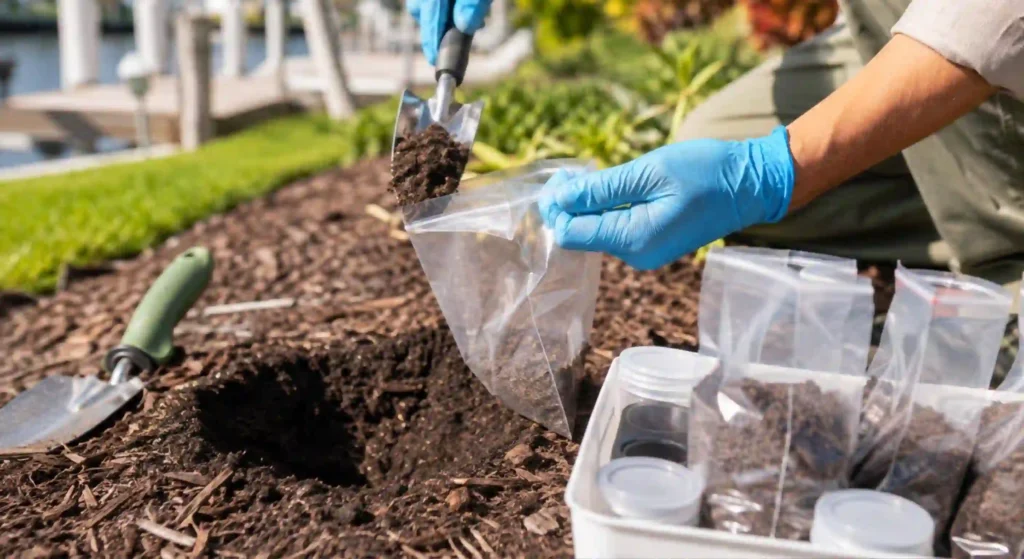
Instead of continuing to apply fertilizer without knowing what the soil contains, the homeowner schedules professional soil sampling and analysis.
Samples are collected from representative areas of the landscape and evaluated to identify relevant soil characteristics.
The results provide a clearer picture of the root environment. The homeowner can then make landscape decisions based on the actual soil conditions rather than relying on assumptions.
This is an illustrative scenario rather than a specific customer case, but it demonstrates why soil testing can be more useful than repeatedly treating symptoms.
Why Professional Soil Sampling Matters
A soil test is only as useful as the sample being tested.
Taking one handful of soil from an arbitrary location may not accurately represent the entire landscape.
Different areas of a property can have different conditions.
For example, soil beneath a lawn may differ from soil in a planting bed. Areas near construction, drainage paths, established trees, or recently amended beds may also have different characteristics.
Professional sampling helps create a more representative picture of the property.
Sample the Right Areas
Sampling should consider how the property is being used and where plants are experiencing problems.
If one section of the landscape is thriving while another is struggling, treating both areas as identical may produce misleading conclusions.
Avoid Contamination
Samples can be affected by materials such as recently applied fertilizer, compost, or other amendments.
Proper sampling practices help ensure the laboratory receives soil that accurately represents the area being evaluated.
Interpret the Results
A laboratory report can contain numbers that are difficult for homeowners to interpret without context.
Professional landscape specialists can use the results to help determine which conditions may be contributing to plant performance and what changes may be appropriate.
Soil Testing Can Prevent Unnecessary Fertilization
One of the most practical benefits of soil analysis is avoiding unnecessary applications.
More fertilizer does not automatically mean healthier plants.
If a particular nutrient is already present at an adequate level, adding more may not address the actual problem.
The issue could instead involve pH, drainage, moisture management, root conditions, or another environmental factor.
Testing provides a starting point for making more targeted decisions.
This can also help reduce the habit of treating the entire landscape with the same products regardless of what individual areas need.
Fort Lauderdale Rainfall Makes Nutrient Management Important
South Florida landscapes experience substantial rainfall, particularly during the wet season.
Rain is essential for plant growth, but frequent heavy rainfall can influence soil moisture and nutrient movement.
In sandy soil, water can move rapidly through the root zone.
That combination means landscape management should account for both nutrient availability and how the soil handles water.
A soil test does not replace proper irrigation or drainage management, but it gives property owners another important piece of information when planning landscape care.
Soil Testing Before Installing New Landscaping
Testing is not only useful when plants are already struggling.
It can also be valuable before a major landscape installation.
A homeowner planning a new lawn, planting beds, trees, or ornamental landscape can use soil information to understand the existing growing environment before investing in plants.
Match Plants to Conditions
Different plants have different soil preferences.
Knowing the property’s pH, nutrient conditions, and soil characteristics can help landscape professionals select plants that are better suited to the site.
Plan Amendments More Carefully
If testing identifies a soil deficiency or unfavorable condition, amendments can be incorporated into the landscape plan rather than added randomly after plants have already been installed.
Establish a Baseline
A first soil test creates a reference point.
Future testing can then be compared with the original results to evaluate how soil conditions have changed over time.
Why DIY Soil Testing Can Miss Important Details
Home soil-testing kits can provide basic information, but professional soil analysis offers a more systematic approach.
The biggest issue is not necessarily the testing equipment itself.
It is understanding what should be sampled, where samples should come from, what the results mean, and how those results relate to the plants and landscape.
A homeowner may see a low nutrient number and immediately purchase fertilizer.
A professional can consider the entire situation.
For example, a nutrient deficiency may be related to soil pH rather than an actual lack of the nutrient. Alternatively, poor plant growth may have little to do with nutrients and instead be connected to drainage, root damage, pests, or excessive moisture.
Professional analysis helps prevent a single test result from being interpreted in isolation.
Soil Testing for Trees and Established Landscapes
Soil analysis is also useful for established trees and mature landscape plants.
Trees may remain in the same location for decades, meaning the surrounding soil can change over time.
Construction, irrigation changes, fertilizer applications, organic matter decomposition, and other landscape activities can influence the root environment.
If an established tree begins showing unexplained decline, soil testing can be one component of a broader professional evaluation.
It can help determine whether the soil environment is contributing to the problem.
Frequently Asked Questions
What does a professional soil test check?
A soil analysis can evaluate characteristics such as pH, nutrient availability, and other soil conditions relevant to plant health. The exact testing panel depends on the property and the purpose of the analysis.
Why should Fort Lauderdale homeowners test their soil?
Local sandy soils can drain quickly, while heavy rainfall can influence moisture and nutrient movement. Testing provides information that can help guide fertilization, amendments, and plant selection.
Should I test soil before landscaping?
Yes. Testing before installing a new lawn, trees, or planting beds can provide useful information about the existing soil and help professionals make better decisions about plant selection and soil amendments.
How often should landscape soil be tested?
There is no universal schedule. Testing frequency depends on the landscape, previous soil conditions, fertilizer and amendment use, plant performance, and the goals of the property owner. A professional can recommend an appropriate testing interval based on the initial results.
Can soil testing explain why plants are dying?
It can help identify soil-related problems, including unfavorable pH or nutrient deficiencies. However, plant decline can also result from pests, diseases, improper irrigation, drainage, root damage, or environmental stress, so soil testing may be one part of a broader diagnosis.
Should I add fertilizer before testing?
It is generally better to understand the soil first when possible. Testing can help determine whether fertilizer is actually needed and which nutrients may require attention.
Get Professional Soil Testing in Fort Lauderdale
Healthy landscaping starts below the surface. In Fort Lauderdale, sandy soil, seasonal heavy rainfall, and the area’s warm growing conditions can make soil management an important part of maintaining lawns, trees, and planting beds.
When plants struggle, guessing at the solution can lead to unnecessary fertilizer applications or amendments that do not address the real problem. Professional soil sampling and analysis provides a clearer picture of the growing environment and helps landscape professionals make more informed recommendations.
Testing can identify important soil characteristics, including pH and nutrient availability, while proper sampling helps ensure the results represent the area being evaluated. From new landscape installations to established trees and lawns showing unexplained decline, soil analysis can provide valuable information before making significant changes.
If your Fort Lauderdale landscape is struggling or you are planning a new planting project, contact a professional for soil sampling and analysis in Fort Lauderdale, FL. A proper soil assessment can give you the information needed to build a healthier, more resilient landscape from the ground up.