
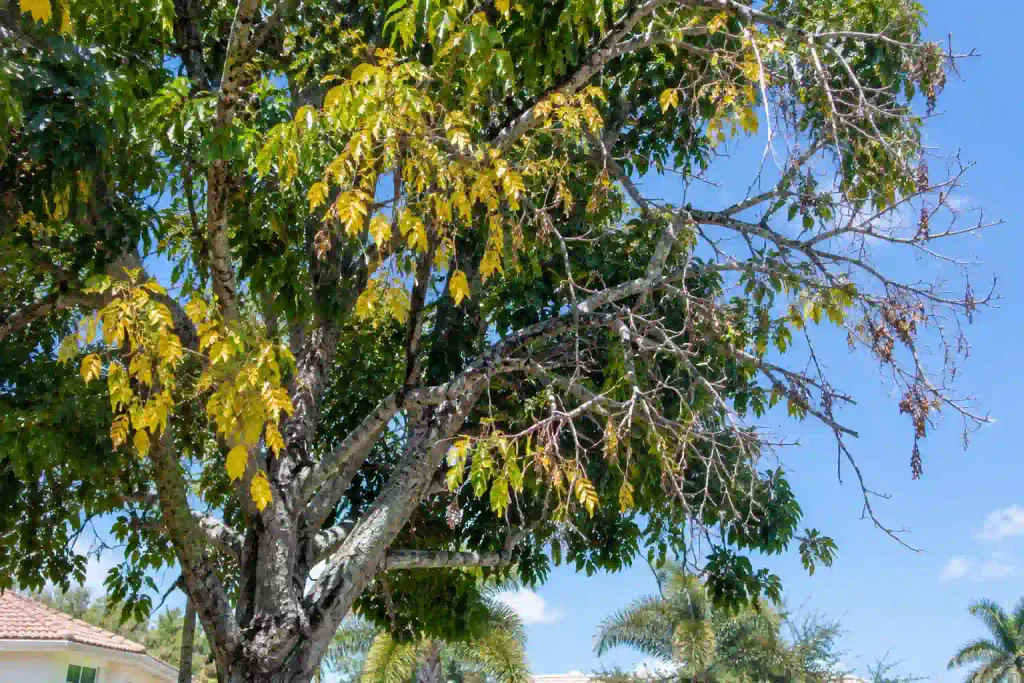
In Fort Lauderdale, Florida, trees face year-round heat, humidity, heavy rainfall, and seasonal tropical storms that can put stress on their health and structural stability. A tree that once provided shade and beauty may begin showing yellow leaves, dead branches, fungal growth, or a sudden change in its natural shape. These symptoms can indicate Tree Disease, pest activity, environmental stress, or structural damage that needs professional attention.
Not every unhealthy-looking tree is dying. Seasonal leaf changes, drought stress, nutrient deficiencies, and root damage can produce similar symptoms. However, ignoring persistent warning signs can allow a manageable problem to become more serious, potentially increasing the risk of falling branches or tree failure during strong winds.
All About Trees Tree Service in Fort Lauderdale provides professional arborist services and tree risk assessments to help property owners identify signs of disease, structural weakness, and other hazards. Its assessment process examines tree condition, identifies potential risks, and recommends appropriate mitigation measures based on the findings.
Common Signs of Tree Disease Every Homeowner Should Know
Recognizing changes in a tree’s appearance is the first step toward determining whether it needs professional evaluation. While individual symptoms do not always confirm disease, several warning signs deserve attention.
Yellowing or Discolored Leaves
Leaves that turn yellow outside their normal seasonal pattern may indicate that a tree is experiencing stress. Other concerning changes include brown leaf edges, unusual spotting, premature leaf drop, or foliage that appears smaller than usual.
In South Florida, these symptoms can result from excessive moisture, inadequate drainage, root damage, nutrient deficiencies, pests, or disease. A professional Tree Disease assessment can help distinguish among these possibilities instead of treating the wrong problem.
Dead or Dying Branches
Dead branches in the canopy are another important warning sign. A few dead twigs may occur naturally as a tree grows, but large dead limbs or widespread canopy decline can indicate a more serious issue.
Deadwood also creates a safety concern when branches hang above driveways, sidewalks, patios, or roofs. During Fort Lauderdale’s storm season, weakened limbs may be more vulnerable to breaking under wind loads.
Professional arborists can inspect the Tree Disease, identify hazardous branches, and determine whether corrective pruning or further investigation is needed.
Fungal Growth on the Trunk or Roots
Mushrooms or shelf-like fungal growths around a tree’s trunk or exposed roots may indicate decay in the underlying wood. Certain fungi break down structural tissues, potentially weakening the tree even when its canopy still looks relatively healthy.
Not every mushroom growing near a tree means the Tree Disease. Some fungi live in the surrounding soil and decompose old organic matter. However, fungal growth directly attached to the trunk or major roots warrants closer inspection.
Avoid removing visible fungal growth and assuming the Tree Disease problem is solved. The important question is whether the underlying wood or root system has been compromised.
Cracks, Cavities, or Peeling Bark
A tree’s trunk provides structural support, so significant cracks, cavities, and damaged bark deserve attention. Some trees naturally develop surface irregularities, but deep splits, expanding cavities, or sections of loose bark can indicate injury or internal deterioration.
Cavities may develop after branches break or wounds fail to close properly. Decay organisms can then affect the exposed wood, depending on the tree species and conditions.
A visual inspection alone may not reveal how much sound wood remains inside the trunk. Professional assessment can help determine whether the defect affects structural stability and what action is appropriate.
Sudden Leaning or Disturbed Soil
A tree that suddenly begins leaning, particularly after heavy rain or a storm, may have experienced root damage or soil movement. Raised soil, cracks around the base, or exposed roots can indicate that the root plate has shifted.
This is especially important when a large tree stands close to a house, parking area, or pedestrian walkway. A newly leaning tree should be treated as a potential safety concern until it has been evaluated.
Keep people away from the affected area and contact a qualified tree professional promptly. If the tree appears unstable or threatens a structure, do not attempt to inspect or stabilize it yourself.
Why Fort Lauderdale’s Climate Can Affect Tree Health
South Florida’s climate supports lush vegetation, but it can also create conditions that challenge tree health. High humidity and frequent rainfall may encourage certain fungal diseases, particularly when foliage remains wet or airflow is restricted.
Heavy rain can saturate the soil and affect root oxygen availability. Poor drainage may contribute to root decline, while storm winds can break branches or damage roots and trunks. Salt exposure, compacted soil, construction activity, and inappropriate pruning may also place stress on certain trees.
Different species respond differently to these conditions. A symptom that is normal for one species may be a warning sign in another. This is why tree identification, local growing conditions, and a thorough assessment are important when diagnosing suspected disease.
Homeowners should avoid applying fertilizer, fungicides, or other treatments simply because a tree looks unhealthy. The correct response depends on the underlying cause, and unnecessary treatments may fail to address the problem.
How a Professional Tree Risk Assessment Helps
When a tree shows multiple warning signs, professional evaluation can help determine whether the primary concern is disease, structural weakness, or both.
All About Trees Tree Service provides tree risk assessments using a systematic approach that examines visible defects, the tree’s surroundings, and the potential consequences of failure. The company reports that its assessments are guided by certified arborist expertise and may use additional diagnostic tools when internal decay is suspected.
Visual Tree Assessment
An arborist examines the tree from the root collar to the canopy, looking for cracks, deadwood, fungal growth, unusual leaning, damaged roots, and other visible symptoms.
The inspection also considers the tree’s overall structure, condition, and surrounding environment. These details help determine whether additional testing or corrective work may be appropriate.
Advanced Diagnostic Techniques
Some structural defects are hidden inside the trunk or major limbs. When the visual findings justify further investigation, specialized equipment may help assess internal wood condition.
For example, sonic tomography can help map variations in wood structure, while a resistograph measures resistance as a fine drill penetrates wood. These tools have limitations and are used when appropriate; they do not replace the arborist’s professional judgment.
Risk Evaluation and Recommendations
An assessment considers not only the likelihood of a tree or branch failing, but also whether it could strike a person, building, vehicle, or other target and how serious the consequences could be.
Depending on the findings, recommendations may include monitoring, corrective pruning, support systems, additional diagnostic testing, or removal when a tree presents an unacceptable risk.
The objective is to identify the most suitable action rather than automatically removing every tree that shows signs of decline.
A Realistic Example: Recognizing a Declining Tree Early
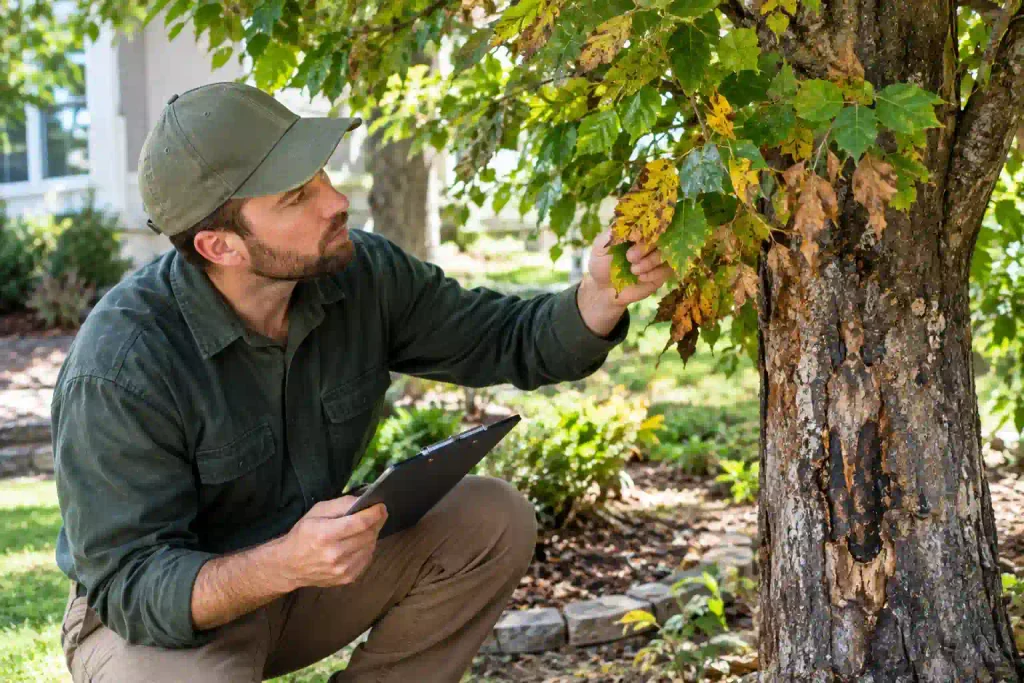
Imagine a Fort Lauderdale homeowner who notices that a mature shade tree has begun losing leaves outside its usual seasonal pattern. Several upper branches appear dead, and shelf-like fungal growth has developed near the trunk.
Initially, the homeowner assumes the tree needs fertilizer. However, the combination of canopy decline and fungal growth raises concerns about possible decay.
The homeowner schedules a professional tree risk assessment. The arborist examines the trunk, root area, canopy, and nearby structures, then determines whether additional diagnostic testing is necessary. Based on the findings, the homeowner receives recommendations for managing the tree’s health and any identified hazards.
This is an illustrative scenario, not a verified customer case. It shows why assessing the underlying problem is more useful than treating individual symptoms without understanding their cause.
What to Do When You Suspect Tree Disease
If you notice persistent changes in a tree, record the symptoms and arrange an appropriate inspection. Photographing the affected leaves, trunk, and branches can help document how the condition changes over time.
Avoid cutting large branches, climbing the tree, drilling into the trunk, or applying chemicals without knowing what is causing the problem. These actions may create additional hazards or make diagnosis more difficult.
Keep the area clear if large branches appear unstable or the tree has developed a sudden lean. Trees near homes, roads, power lines, and frequently used outdoor areas deserve particular attention because the consequences of failure can be significant.
Regular professional inspections can also help identify structural problems before a storm exposes existing weaknesses. For properties with mature trees, this is an important part of responsible landscape management.
Frequently Asked Questions About Tree Disease
Can a tree recover from disease?
Some trees can recover or stabilize when the underlying problem is identified early and appropriate treatment is available. Others may have irreversible decay or extensive root damage. Recovery depends on the tree species, disease, severity, and overall condition.
Does fungal growth always mean a tree is dying?
No. Some fungi decompose organic matter without seriously harming a living tree. However, fungal growth on the trunk or major roots can indicate internal decay and should be evaluated by a qualified arborist.
Should I remove a tree with dead branches?
Not necessarily. Dead branches may require professional pruning, while more extensive canopy decline can indicate a larger health or structural problem. An assessment helps determine whether pruning, monitoring, further testing, or removal is appropriate.
How often should trees be inspected in Fort Lauderdale?
Inspection frequency depends on the tree’s condition, age, location, and exposure to storms. Trees with visible defects or recent storm damage may need prompt evaluation, while mature trees near buildings benefit from periodic professional assessments.
Who should inspect a potentially dangerous tree?
A qualified arborist with appropriate training in tree health and risk assessment is a suitable professional to contact. For trees with significant structural concerns, look for relevant credentials and experience with risk evaluation.
Protect Your Trees With Professional Assessment
Recognizing the early signs of Tree Disease can help Fort Lauderdale homeowners address problems before they develop into more serious health or safety concerns. Yellowing leaves, dead branches, fungal growth, trunk cavities, and sudden leaning all deserve attention when they occur unexpectedly or worsen over time.
All About Trees Tree Service provides professional arborist services and tree risk assessments throughout Fort Lauderdale and surrounding Broward County communities. Its team evaluates tree condition, identifies potential hazards, and recommends appropriate next steps to help protect both trees and nearby property.
If your tree looks unhealthy or shows signs of structural damage, visit All About Trees Tree Risk Assessments to learn more about professional evaluations.
Call (954) 608-8837 to request a estimate or schedule a tree assessment. Early professional guidance can help you understand your tree’s condition and make an informed decision about its care.