
Yellow leaves are one of the most common tree health concerns for homeowners in Boca Raton. While many people assume yellow foliage means a tree simply needs fertilizer or more water, the real issue is often more complex. In South Florida landscapes, iron chlorosis is a frequent cause of leaf discoloration, and without proper diagnosis, treatment efforts may not solve the underlying problem.
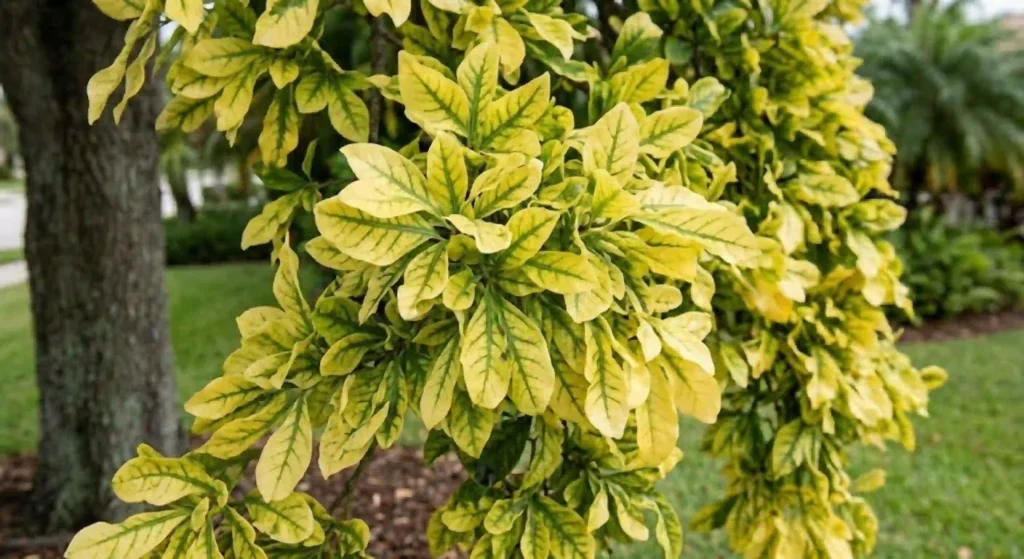
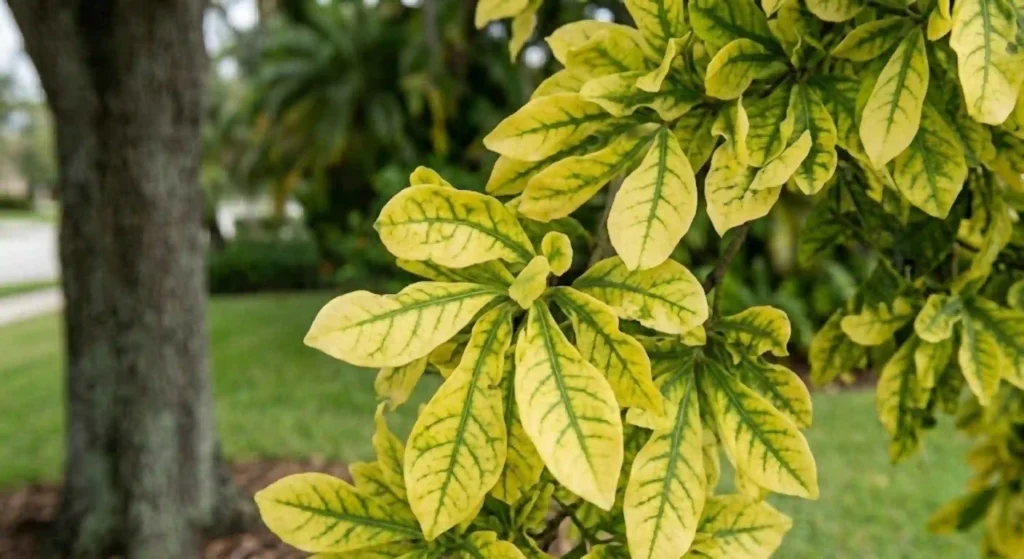
Iron chlorosis happens when trees cannot absorb enough usable iron to produce chlorophyll, even when iron exists in the soil. This results in leaves turning yellow while veins often remain green. Over time, untreated chlorosis can weaken trees and increase vulnerability to stress and decline.
What Is Iron Chlorosis?
Iron chlorosis is a nutrient-availability issue rather than simply a lack of iron.
The classic symptoms include:
- Yellow leaves with darker green veins
- Pale or nearly white new growth
- Smaller leaves than normal
- Slower overall growth
- Browning around leaf edges in advanced stages
The condition reduces chlorophyll production, which limits the tree’s ability to create energy through photosynthesis.
Why Boca Raton Trees Are More Vulnerable
Boca Raton landscapes create conditions that can make chlorosis more common.
Local factors may include:
Sandy, Alkaline Soil Conditions
Boca Raton’s sandy coastal soils drain quickly and tend to contain lower organic matter. Trees sensitive to alkaline conditions can struggle to access iron even when nutrients are present.
Water Management Challenges
Both overwatering and restricted root oxygen can worsen nutrient uptake and contribute to chlorosis symptoms.
Species Sensitivity
Some trees are naturally more prone to iron chlorosis than others depending on their soil tolerance and nutrient requirements.
Job Story: Diagnosing Yellow Leaves Before Tree Decline
A Boca Raton homeowner noticed that one mature landscape tree was gradually losing color while nearby trees remained green.
At first, extra watering and fertilizer appeared to help briefly.
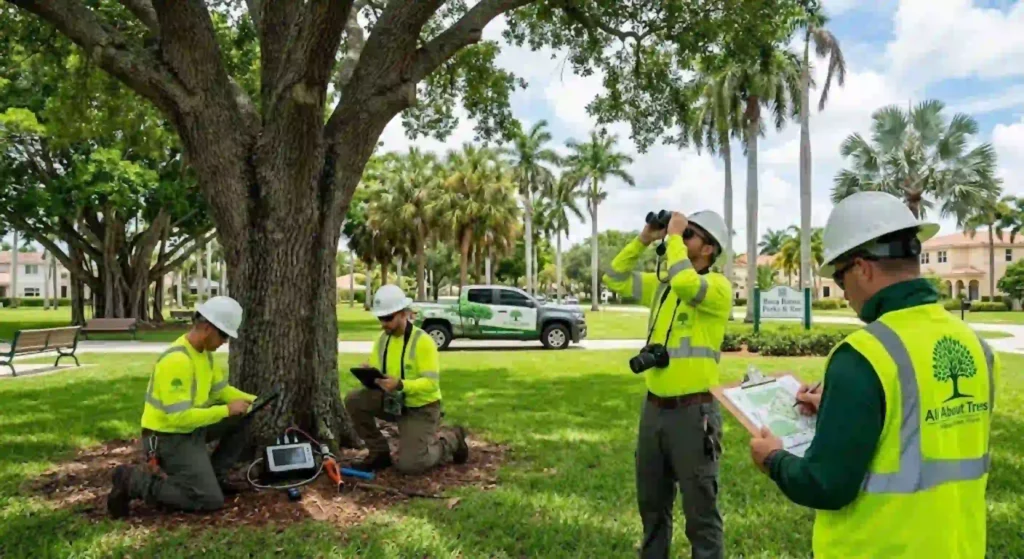
During a professional tree assessment, the issue was traced to chlorosis-related nutrient availability rather than irrigation alone. The evaluation focused on canopy condition, visible stress indicators, soil conditions, and overall tree stability.
Instead of replacing the tree unnecessarily, the homeowner implemented a targeted tree care plan based on professional findings.
This type of assessment-first approach often prevents misdiagnosis and unnecessary treatment.
Professional Advantage: Why Iron Chlorosis Is Not a DIY Diagnosis
Yellow leaves can look similar across multiple problems.
Professional tree assessment helps separate chlorosis from:
- Root stress
- Water imbalance
- Soil compaction
- Disease conditions
- Insect damage
- Other nutrient deficiencies
Soil Evaluation
High pH can lock iron into forms roots cannot absorb. Soil analysis helps identify whether availability—not total iron, is the issue.
Tree Risk Assessment
Weak trees may also develop structural concerns that are not obvious from leaf color alone.
Long-Term Planning
Professional assessment allows homeowners to improve management decisions rather than repeatedly applying temporary treatments.
Community Insight: What Arborists Commonly Notice
Tree owners often notice the same pattern repeatedly: leaves turn yellow, veins remain green, and general tree vigor drops.
One discussion in an arborist community described this pattern as a classic indicator of iron chlorosis in alkaline conditions and emphasized soil testing before treatment decisions.
Signs You Should Schedule a Tree Assessment
Consider professional evaluation if you notice:
Yellowing Concentrated on New Growth
Iron-related chlorosis frequently appears first on newer leaves.
One Side of the Tree Losing Color
Chlorosis sometimes affects sections of the canopy rather than the entire tree.
Recurring Seasonal Yellowing
Repeated symptoms often suggest an environmental or soil-related issue.
Reduced Growth or Branch Stress
Persistent chlorosis can reduce energy production and weaken overall health.
Long-Term Tree Health Starts With Correct Diagnosis
Tree care decisions become more effective when they are based on accurate assessment.
Professional evaluations help homeowners:
- Identify underlying stress factors
- Understand soil influence
- Monitor structural condition
- Develop maintenance priorities
- Protect long-term landscape value
Conclusion
Yellow leaves in Boca Raton trees are not always a simple watering or fertilizer issue. Iron chlorosis is a common cause of discoloration in trees growing under challenging soil conditions, and accurate diagnosis is essential before taking action.
Professional tree assessment helps identify the actual cause, reduce unnecessary treatments, and support healthier long-term growth.
Call to Action
Concerned about yellow leaves or declining tree health? Schedule a professional tree assessment and get a clear evaluation before small symptoms turn into major tree problems.
Frequently Asked Questions
Does yellow foliage always mean iron deficiency?
No. Similar symptoms can result from watering issues, soil conditions, pests, or other nutrient problems.
Can trees recover from iron chlorosis?
Recovery depends on severity and whether the underlying cause is properly identified.
Why are only some leaves yellow?
Chlorosis may affect new growth, certain branches, or specific areas of the canopy.
Is fertilizer enough to fix chlorosis?
Not always. Trees may contain adequate iron but still be unable to absorb it under certain soil conditions.
When should I schedule a tree assessment?
If yellowing persists, spreads, or returns seasonally, professional evaluation is recommended.