
Emerald ash borer can cause serious decline in ash trees by damaging the living tissues beneath the bark. The larvae tunnel through the tree and interfere with the movement of water and nutrients, while visible symptoms may not appear until an infestation is already established. USDA APHIS reports that common warning signs include upper-canopy dieback, dead branches, vertical bark cracks, D-shaped exit holes, and increased woodpecker activity.
Repairing Emerald Ash Borer Damage is therefore not simply a matter of cutting away a few damaged branches. A professional tree care evaluation can determine the extent of the problem and whether the tree may benefit from treatment, corrective pruning, continued monitoring, or removal.
All About Trees Tree Service provides professional tree care, arborist services, tree trimming, pruning, removal, and risk assessments. Its team is led by an ISA Certified Arborist and serves Fort Lauderdale and surrounding Broward County communities.
What Is Emerald Ash Borer Damage?
Emerald ash borer is an invasive wood-boring beetle that attacks ash trees. The larvae feed beneath the bark, creating tunnels that interfere with the tissues responsible for transporting water and nutrients. Because much of this damage occurs beneath the bark, an ash tree can decline before a homeowner realizes there is a serious problem.
The damage may eventually appear as:
- Thinning foliage
- Dead branches in the upper canopy
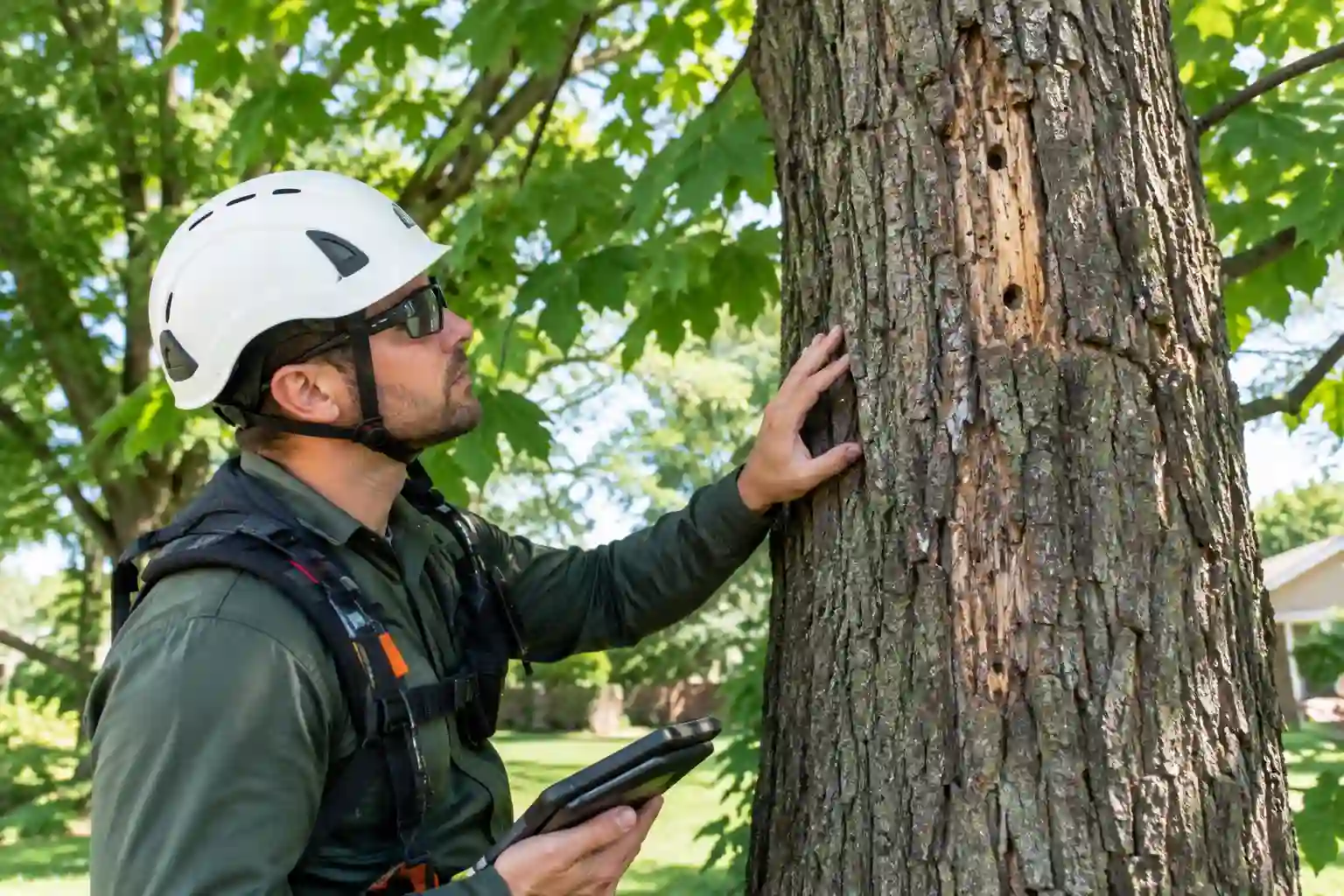
- Vertical cracks in bark
- D-shaped adult exit holes
- Epicormic shoots
- Increased woodpecker activity
- Gradual canopy decline
Some early infestations can be difficult to recognize through a basic visual inspection, which makes professional assessment especially valuable.
Can Emerald Ash Borer Damage Be Repaired?
The answer depends on the condition of the tree.
Not every damaged ash tree needs to be removed immediately. Some trees may be candidates for treatment when the infestation is identified early and the tree remains structurally viable. In other situations, significant decline or structural damage can make removal the safer option.
Professional evaluation should come before deciding what to do.
The goal is to understand:
- Whether emerald ash borer is actually responsible for the symptoms
- How extensive the infestation may be
- How much of the canopy remains healthy
- Whether the tree has structural defects
- Whether treatment or removal is appropriate
USDA guidance notes that treatment options are available and recommends consulting appropriate local tree and extension professionals when considering treatment.
Step 1: Have the Tree Professionally Inspected
The first step in addressing Emerald Ash Borer Damage is a proper evaluation.
A professional arborist can inspect the tree from the root flare through the trunk and into the canopy. They can look for visible symptoms, structural weaknesses, deadwood, signs of pest activity, and other conditions that may be contributing to decline.
This matters because not every dying ash tree has the same cause.
All About Trees provides arborist services designed to identify signs of disease, pest activity, structural weakness, and tree stress. Early evaluation can help property owners make more informed decisions before a problem becomes more serious.
Step 2: Determine How Advanced the Damage Is
Once suspicious symptoms are identified, the next question is how severely the tree has been affected.
An ash tree with limited symptoms may have more options than a tree experiencing extensive canopy dieback and structural deterioration.
Signs such as significant crown decline, numerous dead branches, bark damage, and extensive tunneling can indicate that the tree requires a more serious management decision.
Professional tree risk assessment is particularly important when the tree stands near a home, driveway, walkway, fence, vehicle, or other property.
All About Trees offers formal tree risk assessments through an arborist qualified in Tree Risk Assessment Qualification (TRAQ). Its assessments consider the likelihood of tree or branch failure, potential targets, and consequences.
Step 3: Consider Professional Treatment
When an ash tree is still a viable candidate, professional treatment may be considered.
Treatment decisions depend on factors such as the tree’s condition, the extent of infestation, its location, and the management goals for the property. Treatment is not something homeowners should choose based solely on a few visible holes or dead branches.
A professional can determine whether preserving the tree is realistic and what type of management may be appropriate.
The Iowa State University Extension notes that management options for EAB can include removal of failing trees or preventive insecticide treatment to protect suitable ash trees.
Step 4: Prune Damaged or Hazardous Branches
Pruning may be part of a broader tree-care plan when branches are dead, damaged, or structurally compromised.
However, pruning should not be viewed as a cure for an active emerald ash borer infestation. Removing a few dead branches does not eliminate larvae living beneath the bark.
Instead, professional pruning can address immediate structural concerns while the arborist determines the tree’s longer-term management needs.
All About Trees provides professional pruning and trimming focused on tree health, structure, airflow, and safety.
Step 5: Remove the Tree When Necessary
Severely declining ash trees may eventually become hazardous.
As internal damage progresses, branches can weaken and portions of the tree may fail. A tree with significant structural deterioration may pose a greater risk to people and nearby property.
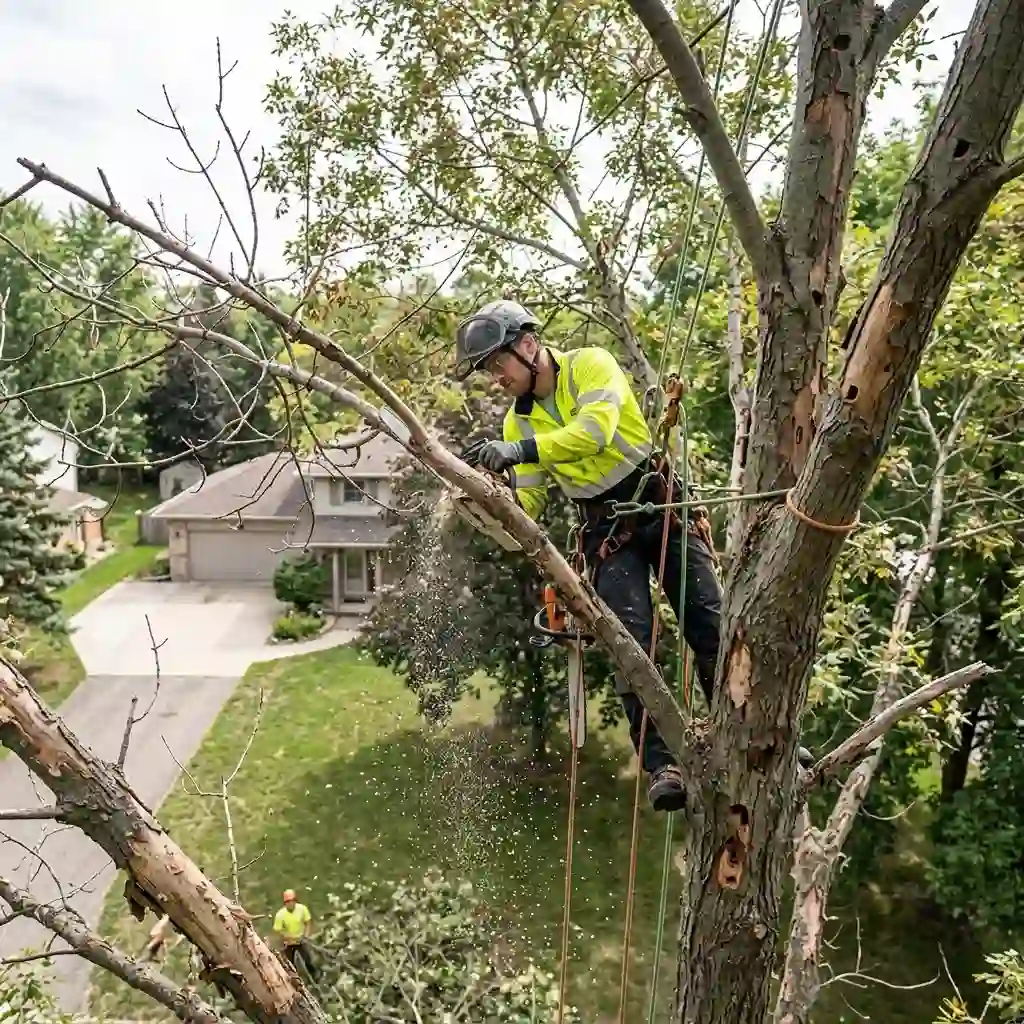
When preservation is no longer practical or safe, professional removal may be the appropriate solution.
All About Trees provides tree removal services for residential and commercial properties and emphasizes safety, professional assessment, and proper cleanup.
The decision should be based on the tree’s condition and risk rather than appearance alone.
A Fort Lauderdale Tree Care Perspective
South Florida property owners deal with a different set of tree-care challenges than homeowners in colder regions. Warm weather, storms, rapid growth, and year-round landscape activity make ongoing professional monitoring important.
Although emerald ash borer is primarily associated with ash trees in areas where the pest is established, homeowners should not automatically assume that every declining tree has EAB. Proper identification matters.
For properties where an ash tree is showing unusual decline, a professional arborist can investigate the symptoms and determine whether pest activity, disease, structural damage, environmental stress, or another issue is responsible.
All About Trees serves Fort Lauderdale and communities throughout Broward County, including Hollywood, Davie, Weston, Plantation, Coral Springs, Boca Raton, and Parkland.
Why Emerald Ash Borer Damage Is Not a DIY Repair
Tree pest problems can be difficult to diagnose from the ground.
A homeowner may notice dead leaves or a few holes in the bark, but the most important damage may be hidden beneath the surface. USDA guidance specifically notes that EAB can be difficult to detect during early infestation because the damage is hidden and decline can be gradual.
Attempting to remove large branches or treat an affected tree without professional guidance can also create unnecessary safety risks.
Professional tree care provides:
- Trained arborist evaluation
- Pest and disease identification
- Structural assessment
- Proper pruning techniques
- Risk evaluation
- Treatment recommendations
- Safe tree removal when necessary
- Cleanup after completed work
All About Trees is led by an ISA Certified Arborist and also holds TRAQ certification for formal tree risk assessments.
Protect Your Trees With Professional Care
Emerald Ash Borer Damage should be taken seriously because the pest can cause progressive decline that may remain hidden during the early stages. Identifying the problem early gives property owners a better opportunity to understand their options.
If an ash tree is showing canopy thinning, dead branches, bark cracks, D-shaped holes, or unusual woodpecker activity, professional evaluation is a smart next step.
All About Trees provides professional tree care, arborist services, pruning, removal, and tree risk assessments throughout Fort Lauderdale and Broward County. Its team is led by an ISA Certified Arborist with TRAQ qualifications and more than 15 years of experience.
Call (954) 608-8837 to request a professional tree assessment or estimate.
FAQs About Emerald Ash Borer Damage
What are the first signs of Emerald Ash Borer Damage?
Common signs include thinning foliage, upper-canopy dieback, dead branches, D-shaped exit holes, bark cracks, epicormic shoots, and increased woodpecker activity.
Can an ash tree recover from Emerald Ash Borer Damage?
Some ash trees may be candidates for professional treatment, particularly when the problem is identified before severe decline. However, heavily damaged trees may require removal.
Does pruning cure Emerald Ash Borer?
No. Pruning can remove dead or hazardous branches, but it does not eliminate an EAB infestation. A professional assessment is needed to determine an appropriate management strategy.
Should I remove an ash tree immediately?
Not necessarily. The tree should be evaluated first. A professional arborist can assess its health, structural condition, and risk before recommending treatment, monitoring, pruning, or removal.
Why should I hire an arborist for Emerald Ash Borer Damage?
EAB damage can be hidden beneath the bark, making professional identification important. An arborist can evaluate tree health and structure and recommend an appropriate course of action.