
Fort Lauderdale property owners face a complicated set of regulations governing trees, landscaping, construction, and property maintenance. In South Florida, Code Violations can develop when a property owner removes a tree without the required permit, damages protected trees during construction, performs improper pruning, or fails to address a hazardous tree. Because local requirements can be detailed and penalties can be costly, professional guidance is often the safest way to determine what needs to be corrected. All About Trees Tree Service helps Fort Lauderdale property owners understand tree-related compliance concerns through professional tree assessments, arborist expertise, and documented recommendations.
What Counts as a Code Violation?
A Code Violation occurs when a property or activity fails to meet requirements established by applicable regulations.
All About Trees explains that code compliance can involve building, electrical, plumbing, mechanical, fire, zoning, and other regulations. These rules establish minimum standards intended to protect public safety, property, and the quality of the built environment.
For homeowners dealing specifically with trees, violations can include activities such as:
- Removing a tree without required authorization
- Improperly pruning protected trees
- Damaging roots during construction
- Changing soil grade around a tree
- Storing construction materials within protected tree areas
- Using improper tree-care practices
- Failing to replace trees when required
- Allowing a hazardous tree to remain on a property
The exact requirements can depend on the tree, property, zoning, location, and nature of the proposed work.
Why Tree Regulations Matter in Fort Lauderdale
Fort Lauderdale has specific landscape and tree-preservation requirements.
For example, the city’s Unified Land Development Code generally requires a Tree Permit before removing qualifying trees or palms. It also restricts activities such as damaging roots, changing natural grades within a tree’s dripline, and operating heavy equipment near trees without appropriate protection.
This means a homeowner cannot necessarily assume that a tree located on private property can be removed whenever they choose.
The situation becomes more complicated when trees are near construction areas, sidewalks, utilities, driveways, or buildings.
Tree Damage Can Also Become a Violation
Code concerns are not limited to cutting down trees.
Fort Lauderdale’s regulations define tree abuse broadly. Examples include excessive canopy removal, root damage, improper cuts, hat-racking, bark damage, soil compaction, construction-related damage, and other actions that can cause unnatural decline or permanently reduce a tree’s function.
Common Tree-Related Code Violations in South Florida
Although regulations vary between jurisdictions, several problems frequently create compliance concerns for property owners.
Removing a Tree Without a Permit
One of the most significant mistakes is removing a tree before confirming whether a permit is required.
Fort Lauderdale’s regulations require a Tree Permit for specified trees and palms, including certain trees measuring at least three inches in diameter at breast height and palms with eight feet or more of clear trunk.
The city also establishes civil fines for violations involving tree removal without a required permit. The current code provides for a first-offense civil fine of $1,000 per tree, plus payment related to the tree’s equivalent value, with higher consequences for repeat offenses.
That makes checking requirements before tree work extremely important.
Improper Pruning
Aggressive trimming can also create compliance problems.
Fort Lauderdale requires tree pruning to follow ANSI A300 standards and prohibits tree abuse. The code limits removal of living canopy to no more than 25% within a one-year period and establishes additional requirements for proper pruning practices.
What may look like ordinary trimming to a homeowner can therefore become a regulatory problem if performed incorrectly.
Construction Damage
Construction projects can create another source of violations.
Heavy machinery, excavation, soil compaction, material storage, and grade changes can damage tree roots even when the trunk and canopy remain untouched.
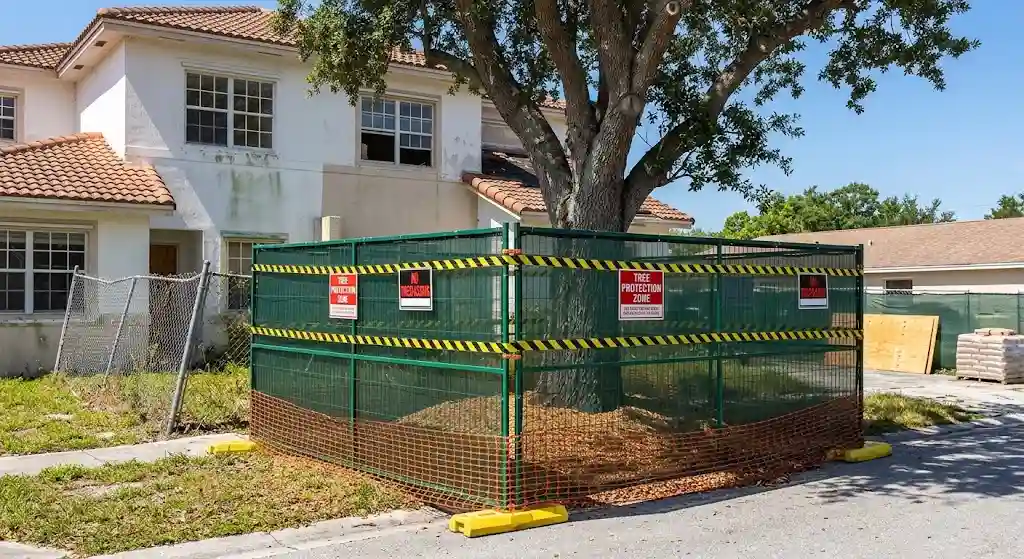
Fort Lauderdale’s regulations specifically address activities within tree protection areas and require appropriate protective measures during development and construction.
A Fort Lauderdale Property Owner’s Code Problem
Consider a Fort Lauderdale homeowner preparing to renovate their property.
A mature tree is positioned close to the planned construction area. The contractor believes removing one large branch and excavating near the tree will create enough space for the project.
Before work begins, the homeowner contacts a professional tree service for an assessment.
The arborist examines the tree, its root zone, surrounding structures, and proposed construction activities. The assessment identifies potential conflicts between the planned work and local tree-protection requirements.
Instead of allowing the project to proceed and potentially creating a violation, the homeowner receives professional recommendations for protecting the tree and modifying the work plan.
The project can then move forward with greater confidence that the tree is being handled appropriately.
This type of proactive assessment is particularly valuable because correcting a violation after work has already occurred can be substantially more complicated than preventing the violation in the first place.
Why Professional Tree Assessments Matter
Tree regulations are not simply about whether a tree looks healthy.
An arborist must consider the species, size, condition, structural defects, location, surrounding property, and potential hazards.
Professional Documentation Can Be Important
Florida law provides a specific pathway for certain residential tree-removal situations involving unacceptable risk. Under Florida Statutes §163.045, documentation from an ISA-certified arborist or Florida-licensed landscape architect can establish that a tree poses an unacceptable risk under specified tree-risk assessment procedures.
That does not mean every tree can automatically be removed without checking local requirements. However, it demonstrates why qualified arborist documentation can be important when navigating tree-related regulations.
Tree Risk Assessments Go Beyond a Visual Opinion
A professional assessment can evaluate whether a tree is structurally compromised and whether its location creates a meaningful risk to people or property.
This becomes particularly important when a homeowner believes a dangerous tree should be removed but the property is subject to preservation requirements.
Instead of simply saying, “the tree is dangerous,” a qualified arborist can provide professional documentation supporting the assessment.
What Happens When a Tree Is Removed Without Authorization?
Property owners should not assume that an unauthorized removal ends the matter once the tree is gone.
Fort Lauderdale’s code provides for replacement or equivalent-value requirements when trees are removed without the necessary Tree Permit. The city can also impose civil fines.
Official Fort Lauderdale enforcement records demonstrate that unauthorized tree removals can result in cases being brought forward for fines.
The financial consequences are only part of the issue.
A property owner may also have to deal with replacement planting, additional documentation, inspections, or corrective measures.
This is why professional compliance guidance should happen before tree removal whenever possible.
How Professional Arborists Help Resolve Code Violations
If you have already received a violation notice, the first step is understanding exactly what the notice requires.
A professional tree service can help evaluate the tree-related portion of the problem.
Step 1: Assess the Property
The arborist examines the trees, affected areas, and circumstances surrounding the violation.
Step 2: Identify the Problem
The professional determines whether the issue involves unauthorized removal, improper pruning, tree damage, hazardous conditions, or another tree-related concern.
Step 3: Document Tree Conditions
Photographs, measurements, assessments, and professional observations can help establish the tree’s current condition.
Step 4: Recommend Corrective Action
Depending on the situation, recommendations could involve corrective pruning, tree protection, additional evaluation, replacement planting, removal, or other appropriate measures.
Step 5: Support Compliance
The property owner can use the professional assessment and recommendations when working toward resolution with the appropriate local authority.
Why DIY Compliance Can Create More Problems
Trying to resolve a tree-related Code Violation without professional knowledge can be risky.
A homeowner may incorrectly assume that a tree can be removed because it is diseased, or that aggressive trimming is acceptable because the tree still appears healthy.
The regulations can be more specific than that.
Fort Lauderdale, for example, distinguishes between different tree types, sizes, conditions, protected trees, construction situations, and removal circumstances.
Professional arborists understand tree biology as well as the documentation that may be necessary to support a risk assessment.
That combination is valuable when a property owner needs more than basic tree trimming.
Why Choose All About Trees Tree Service?
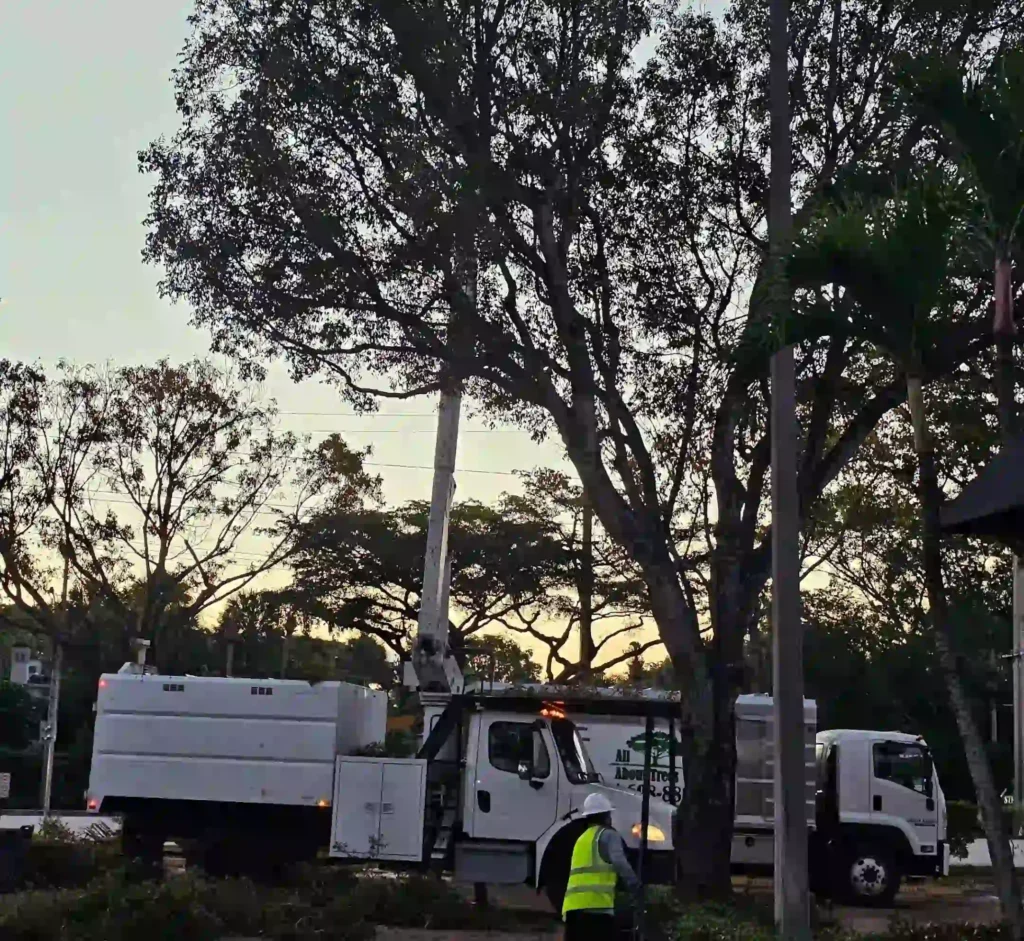
All About Trees Tree Service operates in Fort Lauderdale and South Florida and provides professional tree services backed by arborist expertise.
The company is led by an ISA Certified Arborist and offers formal tree risk assessment services. Its code-compliance information emphasizes that regulatory compliance protects public safety, property investments, and the integrity of the built environment.
The company also provides tree removal, trimming, emergency tree service, stump grinding, and arborist services, allowing property owners to address multiple tree-care needs through a professional provider.
For a Code Violation involving trees, the value of professional service is not simply the physical work. It is the ability to understand the tree’s condition, document relevant findings, and recommend corrective measures based on professional assessment.
Frequently Asked Questions
Can I remove a tree from my Fort Lauderdale property without a permit?
Not necessarily. Fort Lauderdale requires Tree Permits for specified trees and palms, with requirements depending on factors such as tree type and size. Check applicable requirements before removing a tree.
What happens if I remove a tree without a permit?
Fort Lauderdale’s code provides civil fines and replacement or equivalent-value requirements for unauthorized tree removal.
Can improper tree trimming result in a Code Violation?
Yes. Tree abuse is prohibited, and Fort Lauderdale regulations establish specific pruning requirements, including limits on living-canopy removal.
Can an arborist help with a hazardous-tree situation?
Yes. A qualified arborist can assess the tree’s structural condition and document risk. Florida law specifically recognizes documentation from an ISA-certified arborist or Florida-licensed landscape architect for certain residential trees presenting an unacceptable risk.
Should I contact an arborist before starting construction?
Yes. If construction, excavation, grading, or heavy equipment will occur near existing trees, a professional assessment can help identify protection requirements and potential conflicts before work begins.
Resolve Tree-Related Code Violations Before They Become More Expensive
South Florida property owners should take tree regulations seriously. A seemingly simple decision to remove a tree, cut a large portion of its canopy, or excavate near its roots can create a Code Violation when local requirements are overlooked.
Fort Lauderdale’s tree regulations address permits, pruning, tree protection, construction activities, replacement requirements, and penalties for unauthorized removal.
Professional guidance can help property owners understand what they are dealing with before making a costly mistake. All About Trees Tree Service provides arborist services and tree risk assessments designed to evaluate tree conditions and help property owners make informed decisions.
If you have received a tree-related Code Violation, are planning construction near mature trees, or are unsure whether a tree can legally be removed or pruned, contact All About Trees Tree Service at (954) 608-8837 to schedule an assessment or request a estimate.