
Davie’s equestrian community is known for its riding trails, horse farms, training facilities, and large residential properties, but those same open landscapes create unique tree management challenges. A tree that appears healthy from a distance can become a serious safety concern when branches extend over paddocks, root systems affect fencing, or storm conditions weaken structural stability. That is why professional Tree Risk Assessment for Equestrian properties in Davie FL has become an important part of responsible property management.
Unlike standard residential evaluations, equestrian tree assessments focus on how trees interact with horses, riding areas, barns, equipment access, and daily movement patterns. Best Tree Trimming provides professional tree risk assessment services designed to identify hazards before they become emergencies and help property owners make informed decisions about maintenance, pruning, preservation, or removal.
Why Tree Risk Assessment Matters on Horse Properties
Equestrian properties create different risk conditions than traditional residential lots.
- Horse turnout areas
- Riding arenas
- Barn access routes
- Fence stability
- Trailer movement paths
- Emergency vehicle access
Davie’s combination of strong summer storms, saturated ground conditions, and fast seasonal growth can increase the likelihood of branch failure or tree instability.
Professional assessments help identify issues early and support safer property use year-round.
Common Tree Risks Found on Equestrian Properties
Tree hazards are not always obvious.
Overextended Limbs Above Paddocks
Heavy limbs hanging over turnout areas may create danger during storms or high winds.
Root Systems Affecting Fencing
Tree roots can shift posts, alter drainage, and weaken fence alignment.
Internal Structural Weakness
A tree may appear healthy externally while developing internal decay.
Dead or Declining Canopies
Dead branches increase fall risk and reduce overall tree stability.
Trees Too Close to Barn Structures
Branches contacting roofing or structures may create maintenance and storm concerns.
Professional risk assessments evaluate both visible and developing conditions before failure occurs.
Job Story: Preventing a Tree Emergency at a Davie Horse Property
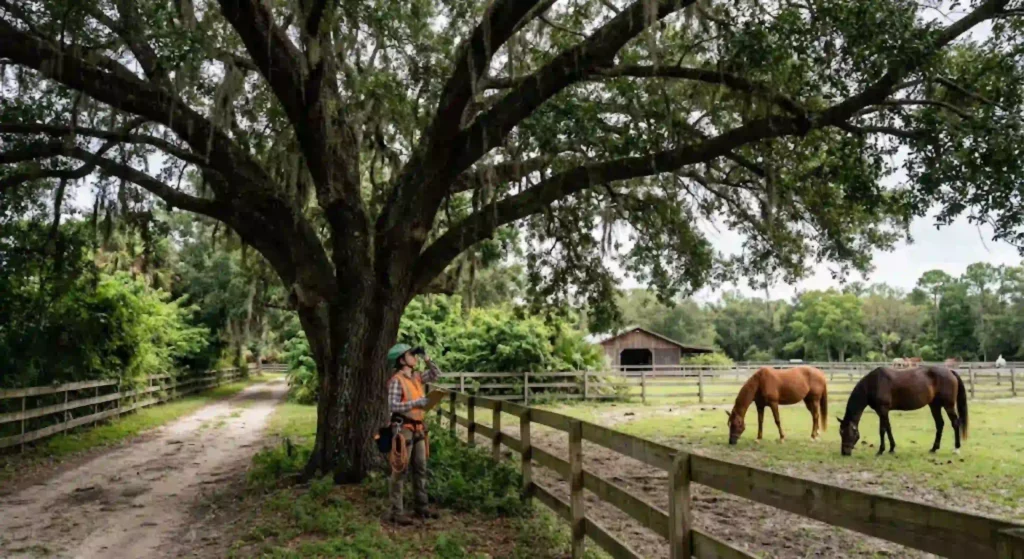
A property owner in Davie managed a small equestrian facility with riding areas and shaded turnout spaces.
After several windy weather events, they noticed one mature tree beginning to drop larger limbs into a paddock area.
The tree still appeared healthy overall, so immediate removal did not seem necessary.
A professional tree risk assessment revealed multiple concerns:
- Weight imbalance in major limbs
- Structural weakness near branch unions
- Stress caused by repeated weather exposure
- Increased risk to nearby fencing and horse activity areas
Instead of waiting for damage or injury, the service plan included:
- Detailed risk evaluation
- Targeted corrective pruning
- Monitoring recommendations
- Long-term maintenance planning
The property remained functional while reducing avoidable risk.
Professional Advantage: Why Tree Risk Assessment Should Not Be DIY
Tree hazards often develop in ways homeowners cannot easily detect.
Professional assessment provides more than visual observation.
Structured Tree Evaluation
Best Tree Trimming’s assessment process focuses on identifying structural concerns, evaluating failure likelihood, and recommending actions based on observed conditions.
Property-Specific Recommendations
Equestrian environments require attention to animal movement, equipment clearance, and land use patterns.
Storm Preparation Planning
Davie properties benefit from proactive evaluation before severe weather seasons.
Documentation and Long-Term Management
Professional reports help property owners prioritize maintenance and reduce emergency situations.
Tree risk assessments are especially valuable because they focus on prevention rather than reacting after damage occurs.
What Happens During a Professional Tree Risk Assessment
A professional assessment may include:
Site Walkthrough
Review of tree placement and surrounding use areas.
Structural Observation
Inspection of canopy balance, trunk condition, and root concerns.
Hazard Identification
Evaluation of targets such as barns, paddocks, and fencing.
Recommendations
Guidance for pruning, monitoring, preservation, or removal when appropriate.
Best Tree Trimming performs assessments intended to support informed tree management and safer property conditions.
Signs Your Davie Property Should Be Evaluated
Schedule a professional assessment if you notice:
- Branches hanging over horse areas
- Trees leaning after storms
- Visible trunk cracks
- Repeated branch drop
- Fence movement near roots
- Dead canopy sections
- Standing water around root zones
Addressing these issues early may reduce future disruptions.
Protect Your Horses, Property, and Trees
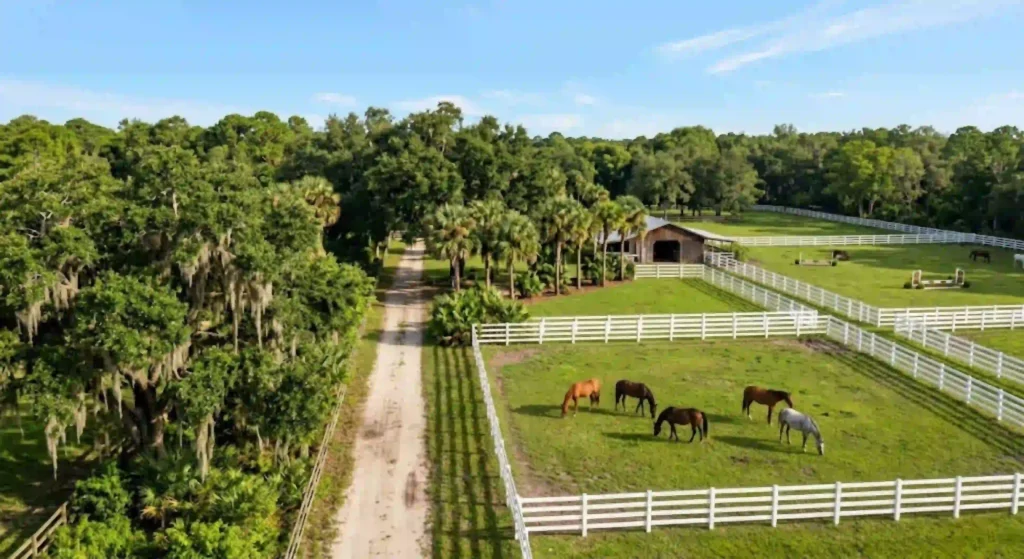
Tree management on equestrian properties requires more than routine trimming. A professional tree risk assessment helps identify hidden concerns, reduce storm-related hazards, and support safer conditions for horses and daily operations.
If your Davie property includes mature trees near barns, riding areas, or fencing, now is the right time to schedule a professional evaluation.
Call to Action
Call Best Tree Trimming today, request a tree risk assessment, or schedule a property inspection to help protect your Davie equestrian property with proactive tree care.